
Best Penalties for Repeat Offenders in Animal Abuse
Published by Nevada Animal Advocates
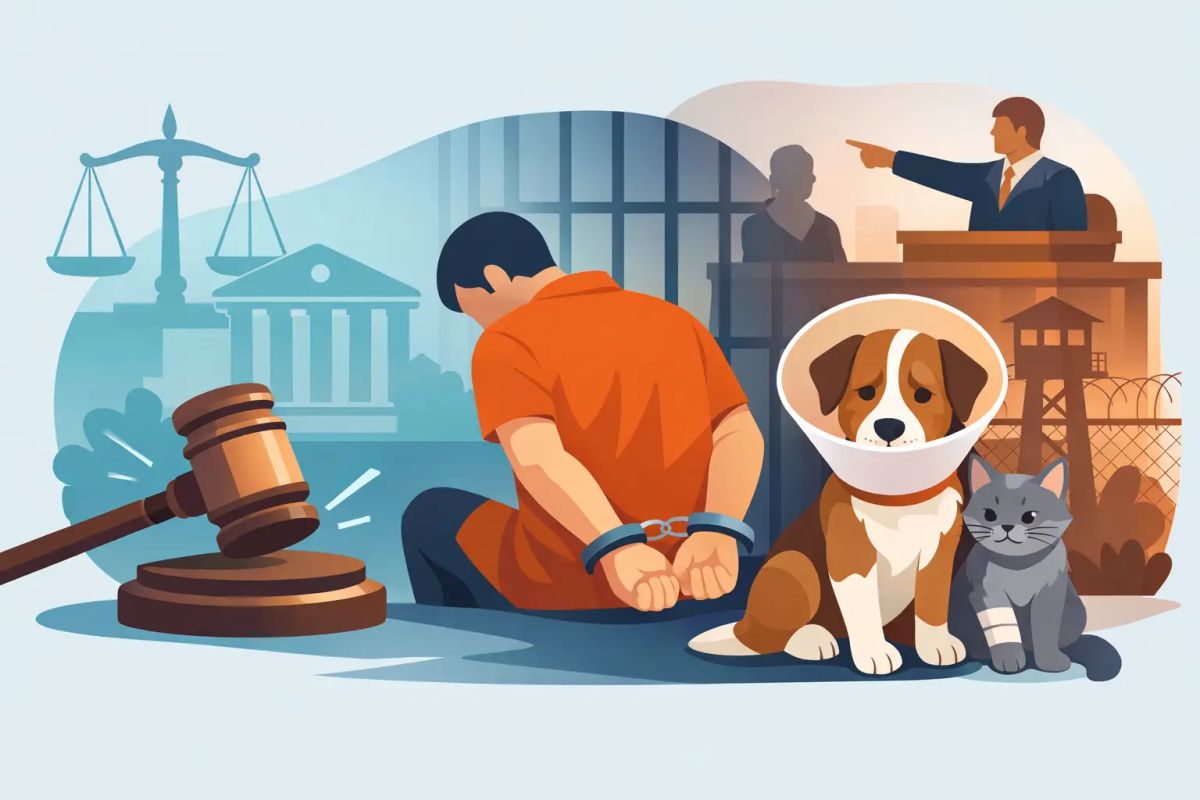
A first animal cruelty conviction should never be treated as a harmless mistake. But when an offender repeats the conduct after a court has already intervened, the public has a clearer and more urgent question to answer: what consequence will actually prevent the next victim? The best penalties for repeat offenders in animal abuse are not limited to a larger fine or a few more days in jail. They create real barriers to acquiring animals, require meaningful supervision, and make accountability visible.
Repeat abuse exposes a failure somewhere in the system. It may show that the original sentence was too weak, that conditions were not enforced, that treatment needs went unaddressed, or that an offender was able to obtain another animal without scrutiny. A credible response must address all of those gaps.
Why Repeat Animal Abuse Demands Escalating Penalties
Animal cruelty is not a private matter when an offender has already been convicted. Animals suffer directly, but communities also bear the cost of neglected animals, overwhelmed shelters, dangerous breeding operations, and repeat calls to law enforcement. Research and case experience have also long raised concerns about the relationship between animal abuse and other forms of violence. That does not mean every animal cruelty offender will commit another crime. It does mean repeat conduct cannot be dismissed as an isolated lapse in judgment.
The purpose of escalating penalties is not punishment for punishment's sake. It is prevention. A second or subsequent offense demonstrates that the first intervention did not adequately protect animals. Sentencing should reflect that increased risk while preserving due process and allowing courts to assess the facts of each case.
A serious policy must also distinguish between circumstances. A repeat offender who intentionally tortures an animal, operates a neglectful commercial enterprise, abandons multiple animals, or violates an existing ownership ban presents different risks. The law should give judges tools to respond proportionately, but it should not leave chronic abusers with the same low-level consequences available after a first offense.
Best Penalties for Repeat Offenders: A Layered Approach
No single sanction is enough. The strongest framework combines criminal consequences with restrictions designed to stop access, expose violations, and address the conditions that fuel repeated cruelty.
Escalating criminal penalties
For repeat offenses, laws should authorize substantially stronger charges and sentencing ranges than those applied to a first offense. That can include felony treatment for defined repeat cruelty conduct, increased incarceration where the facts warrant it, and sentencing enhancements when an offender harms multiple animals, uses extreme violence, or violates a court order.
Fines can be appropriate, particularly when they are directed toward restitution and enforcement. On their own, however, fines are often inadequate. A person who can pay a fine may still be able to purchase or possess another animal the next day. Financial penalties must be paired with restrictions that actually protect animals.
Long-term animal ownership bans
An enforceable prohibition on owning, possessing, residing with, breeding, selling, transferring, or exercising control over animals is often one of the most important consequences for repeat abusers. The duration should rise with the seriousness and pattern of the offense. In severe cases, courts should have authority to impose lengthy or lifetime bans, subject to clear legal standards and appropriate review.
The wording matters. A narrow ban that only prohibits formal ownership is easy to evade. An offender can put an animal in a relative's name while continuing to control care, housing, or breeding. Orders should address indirect possession and prohibit using another person as a proxy.
A ban without verification is only paper protection. Courts should be able to require offenders to disclose their residence, notify supervising authorities of address changes, and submit to compliance checks when legally justified. Violating an ownership ban should carry meaningful consequences, not another warning that simply resets the cycle.
Restitution that reflects the real cost of cruelty
When animals are seized from abusive conditions, public agencies, shelters, rescues, and veterinary providers often absorb enormous costs. Emergency treatment, boarding, transport, rehabilitation, and evidence preservation are not free. Repeat offenders should be required to pay restitution for the care their actions made necessary.
Restitution should not become a loophole that allows an offender to buy their way out of accountability. Its purpose is to prevent the public and animal welfare organizations from carrying the financial burden of abuse. Courts should retain the ability to enforce payment plans and prioritize animal-care costs without treating inability to pay as proof of bad faith.
Evaluation, treatment, and education with enforcement
Some repeat offenders require mental health assessment, counseling, substance-use treatment, or intervention programs that address violence, impulse control, and empathy deficits. These requirements can be valuable, especially when they are tailored to the offender and monitored by the court.
But treatment is not a substitute for an ownership ban or criminal accountability. A person does not earn the right to keep animals simply by attending a class. Education may reduce future harm for some people, yet its value depends on quality, participation, and follow-through. For repeat offenders, treatment should be one part of a protective sentence, not its entire foundation.
Public accountability through conviction-based registries
A statewide animal abuse registry can help close the information gap that allows repeat offenders to move quietly from one animal, neighborhood, or jurisdiction to the next. A well-designed registry should be based on verified convictions or qualifying court findings, identify applicable ownership restrictions, and include processes to correct inaccurate information.
Public access matters because shelters, rescues, breeders, landlords, employers in animal-care settings, and community members cannot protect animals from risks they cannot see. Transparency also creates pressure for courts and agencies to take violations seriously.
Nevada Animal Advocates supports public-facing accountability because animal cruelty should not disappear once a case leaves the courtroom. A registry is not a replacement for law enforcement, but it can make ownership bans more enforceable and help prevent an offender from obtaining animals through deception.
Enforcement Is the Test of Every Penalty
The strongest sentence fails if agencies lack the tools or authority to enforce it. Police, animal control officers, prosecutors, probation departments, and courts need clear procedures for responding when a repeat offender violates a ban, misses a required evaluation, or is found living with animals.
That requires accurate records and communication across jurisdictions. A local shelter should not have to guess whether a prospective adopter is prohibited from possessing animals in another county. Nor should an officer responding to a new cruelty call have to discover a prior conviction only after animals have suffered again.
Enforcement also requires resources. Animal control agencies need trained personnel, safe housing capacity for seized animals, veterinary partnerships, and legal support for complex cases. Legislators should not pass stronger penalties and then deny the agencies responsible for carrying them out the funding to do so.
Safeguards Make Strong Laws More Durable
Advocates for tougher penalties should be equally clear about fairness. Criminal convictions require due process. Registries and restrictions should rely on defined legal criteria, accurate records, notice, and a way to challenge factual errors. Courts must consider the severity of the offense, prior history, compliance with past orders, and the actual risk to animals.
These safeguards do not weaken accountability. They make it more credible. A system that is precise, transparent, and consistently enforced is harder to challenge and more likely to protect animals over time.
Lawmakers should also avoid creating rules that are dramatic on paper but impossible to administer. A lifetime ban may be justified in the most egregious cases, while a lengthy, closely monitored ban may be more appropriate in others. The central principle is simple: repeat abuse must lead to consequences that are strong enough to stop repeat access to victims.
What Communities Can Demand Now
Residents do not need to wait for another high-profile cruelty case to insist on reform. They can ask elected officials whether repeat animal cruelty is charged and sentenced with the seriousness it deserves. They can support funding for animal control and prosecution, demand that ownership-ban violations be investigated, and encourage shelters and rescues to use lawful screening practices.
Journalists and community members can also push for public records practices that do not bury verified cruelty convictions. Public attention should be focused on policy failures and proven misconduct, not rumor or vigilante action. Reporting suspected cruelty to the appropriate authorities, preserving factual information, and following active cases through the court process are practical forms of civic accountability.
Animals cannot report abuse, hire counsel, or vote for stronger laws. That responsibility belongs to the public institutions and residents who know that a repeat offender has already been given one chance too many. The measure of a humane system is whether it acts before another animal pays the price.