A Guide to the Animal Cruelty Prosecution Process
Published by Nevada Animal Advocates
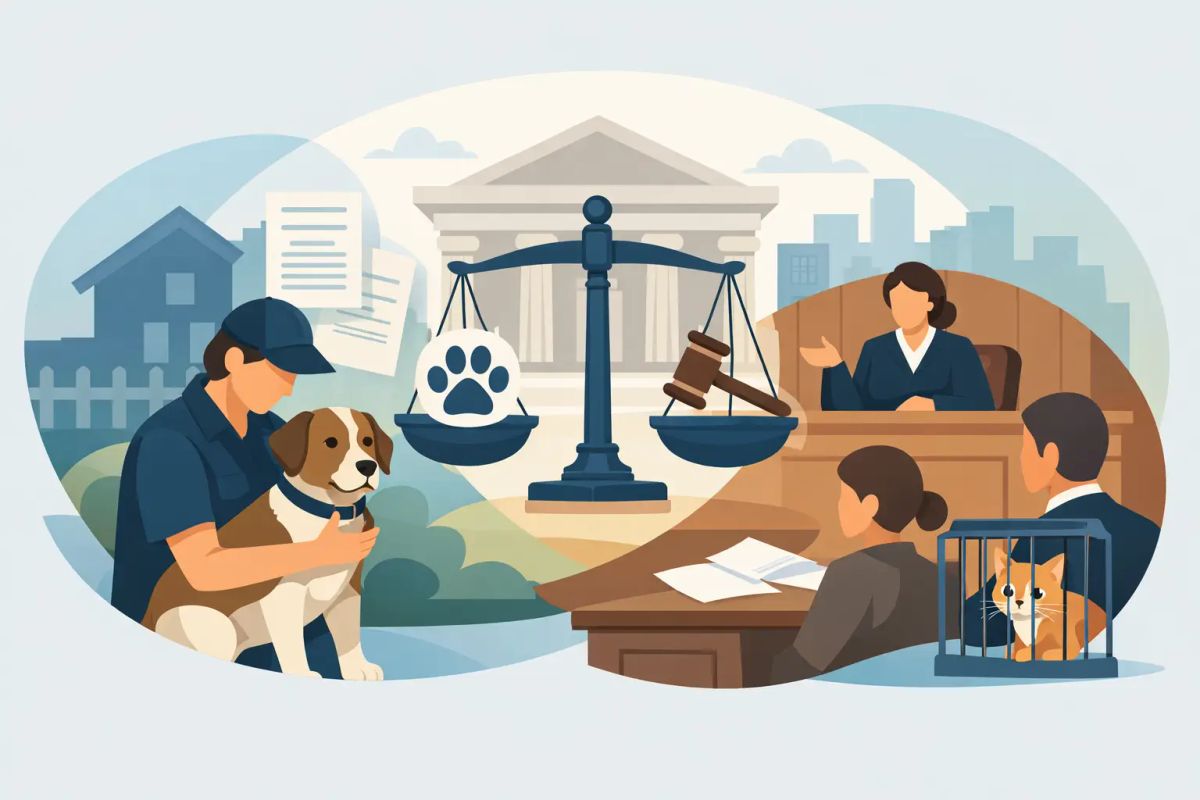
A neglected dog may be removed from a property in hours. Holding the person responsible accountable can take months or longer. This guide to animal cruelty prosecution process explains why that gap exists, what happens after a report is made, and where public attention can make a difference. Animal cruelty is not a private matter or a lesser offense. It is a public-safety issue that demands competent investigation, meaningful prosecution, and consequences that prevent repeat harm.
How Animal Cruelty Cases Move Through the System
The process usually starts with a report to animal control, local law enforcement, or, when immediate danger is present, 911. A report is not a conviction and does not automatically create a criminal case. It is the starting point for an investigation.
Investigators must determine whether an animal is in distress, whether the facts meet the legal definition of cruelty or neglect, and whether evidence can support a charge in court. In Nevada, these matters may involve local animal protection agencies, police departments, sheriffs' offices, and prosecutors. Which agency leads can depend on the jurisdiction, the severity of the conduct, and whether the situation involves additional crimes.
A strong report helps investigators act. It should identify the location, the animal or animals involved, what was observed, when it occurred, and whether there is an immediate threat. Photographs, video, witness names, and prior incident information can be useful, but residents should never trespass, confront a suspected abuser, or put themselves at risk to collect evidence.
Investigation and animal welfare intervention
Once authorities respond, they may document conditions, speak with witnesses, inspect the property when legally authorized, and assess the animals. Veterinary examinations often become central evidence. A veterinarian can document malnutrition, untreated injuries, disease, pain, exposure, or the effects of prolonged deprivation.
Officers may issue warnings or citations in lower-level matters. In more serious cases, they may seek a warrant, seize animals, or make an arrest. The decision turns on the law, the evidence available, the animal's condition, and the immediate risk of harm.
Seizure is often necessary to protect an animal, but it does not resolve the criminal case. Authorities must still preserve evidence, establish who had custody or control of the animal, and prove the required elements of an offense. That work is why cases involving plainly disturbing conditions can still become legally complex.
Charging decisions and court proceedings
After an investigation, law enforcement may submit the case to a prosecutor. The prosecutor reviews the evidence and decides whether charges can be proven beyond a reasonable doubt. Depending on the conduct, prior history, number of animals involved, and applicable law, allegations may be charged as misdemeanors or felonies.
The accused is entitled to due process. There may be an initial appearance, bail conditions, arraignment, motions over evidence, negotiations, hearings, and a trial if the case is not resolved through a plea agreement. A plea deal may include criminal penalties, probation, counseling or evaluations, community service, restitution, restrictions on animal ownership, or other conditions permitted by law.
A dismissal does not always mean abuse did not occur. It can mean evidence was insufficient, a witness could not be located, a search was challenged, the legal standard was not met, or the available charge did not fit the facts. That distinction matters. It should push communities to ask whether agencies have the staffing, training, statutes, and protocols needed to build cases that hold up in court.
What Must Be Proven in an Animal Cruelty Prosecution
Criminal cases are evidence-driven. Outrage is understandable, but prosecutors need admissible proof that connects conduct to a specific person and satisfies the statute at issue.
The key questions often include whether the defendant owned, possessed, controlled, or was responsible for the animal; what care or protection was denied; how long the conditions existed; whether the harm was intentional, knowing, reckless, or negligent under the relevant law; and whether the animal suffered or faced a substantial risk of suffering.
Evidence can include officer observations, body-camera footage, photographs taken over time, veterinary records and expert testimony, necropsy findings, communications from the defendant, surveillance video, neighbor testimony, prior complaints, and records showing access to food, water, shelter, or medical care. The most persuasive cases do not rely on one terrible image. They establish a clear, documented pattern.
Intent can be particularly difficult to prove. An accused person may claim ignorance, financial hardship, lack of ownership, or that another household member was responsible. Those claims do not excuse cruelty, but they can affect what the state must prove and which charges are viable. This is why careful documentation of responsibility, repeated notice, and the animal's condition is so consequential.
Why Accountability Can Break Down
Animal cruelty cases can fail long before a courtroom. A report may be treated as a nuisance complaint. An agency may lack an officer trained to recognize medical neglect. A property may be inaccessible without a warrant. Witnesses may fear retaliation or decline to participate. Shelters and agencies may struggle with the cost of holding seized animals during a lengthy case.
These are institutional problems, not reasons to minimize cruelty. When enforcement is inconsistent, offenders learn that animals can be harmed with little risk of exposure or consequence. Communities then face the burden of repeated neglect cases, abandoned animals, escalating violence, and diminished trust in public institutions.
There is also a difference between a case that results in a conviction and a system that prevents future abuse. A sentence without enforceable ownership restrictions may leave animals vulnerable. A court order without follow-up may be ignored. Records that are difficult for the public or agencies to find can allow a known offender to acquire more animals without scrutiny.
Public accountability tools, including offender registries where authorized and properly maintained, address part of this gap. They do not replace due process or prosecution. They make confirmed offender information more visible and help communities demand that restrictions, court orders, and repeat-offense concerns are taken seriously.
What Residents Can Do Without Compromising a Case
Residents have a meaningful role, but the goal is to strengthen a case, not to turn it into a social media spectacle. Report suspected cruelty promptly through the appropriate local channel. If an animal is in immediate danger, call emergency services. Keep a factual record of what you personally observed, including dates, times, locations, and any changes in the animal's condition.
Avoid reposting unverified accusations, publishing home addresses, or contacting a suspect to demand an explanation. Those actions can endanger witnesses, create confusion, and interfere with an active investigation. If you have photos or video, preserve the original files and provide them directly to authorities when requested.
When a case becomes public, residents can ask informed questions: Was a report taken? Which agency has jurisdiction? Has the case been referred for charging review? Are animal ownership restrictions being requested when legally available? Is there a process for monitoring compliance after disposition? Public pressure is most effective when it is factual, persistent, and focused on institutional responsibility.
Advocates can also press for stronger statutes, clear cross-agency protocols, specialized training, adequate sheltering resources, and transparent reporting on case outcomes. Nevada Animal Advocates supports this kind of structural accountability because prevention requires more than reacting after an animal has suffered.
The Standard Must Be More Than a Conviction
A prosecution is one measure of justice, not the finish line. The real test is whether the system recognized the harm, protected the animals involved, imposed consequences proportionate to the conduct, and reduced the chance that another animal will be harmed.
Every well-documented report, properly investigated case, and enforceable court order helps establish that animal cruelty will be treated as the serious offense it is. Communities should expect nothing less from the systems charged with protecting the vulnerable.