
How to Testify for Animal Welfare in Nevada
Published by Nevada Animal Advocates
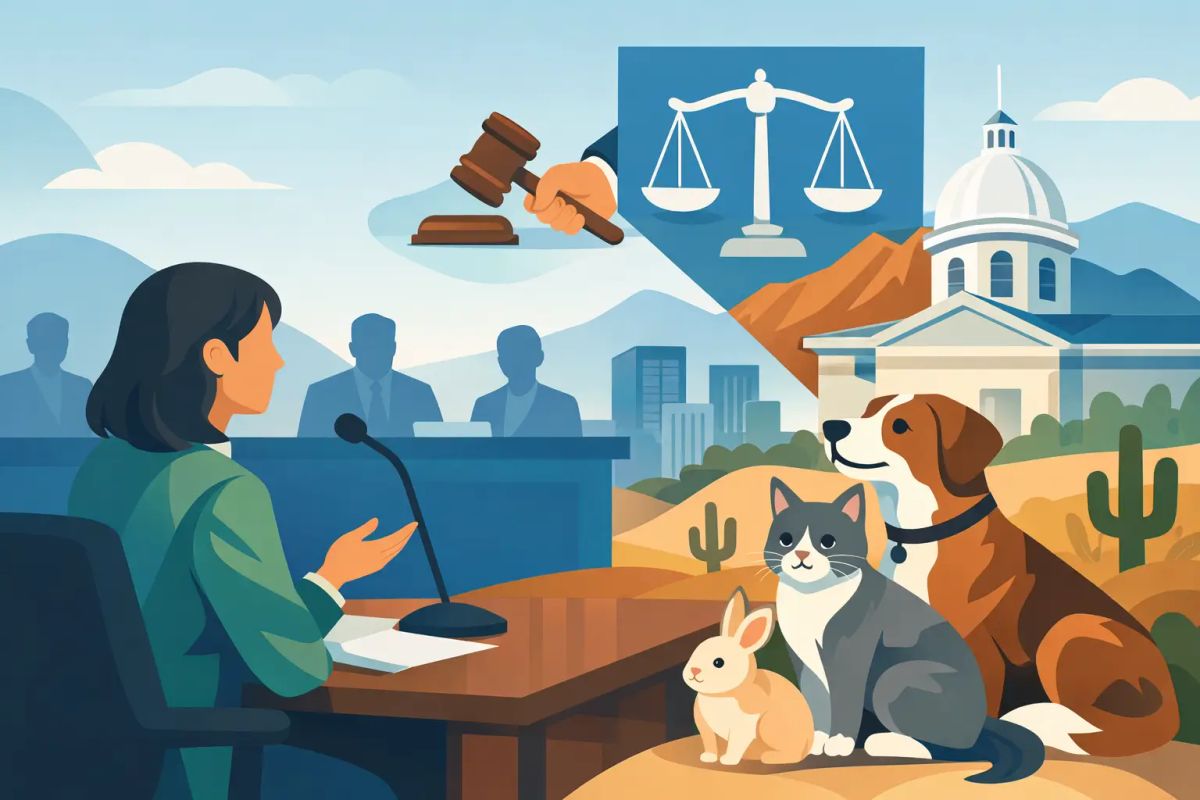
A committee hearing can move quickly: a bill number is called, testimony begins, and the people in the room decide what belongs in the public record. Knowing how to testify for animal welfare means being ready to use those few minutes with discipline, facts, and moral clarity.
Animal cruelty is not a private matter or a lesser public safety concern. It reflects gaps in prevention, enforcement, and accountability that can put animals and communities at risk. When lawmakers consider stronger cruelty penalties, reporting requirements, enforcement standards, or public accountability tools such as an animal abuse registry, testimony gives Nevada residents a direct way to demand action.
Start With the Bill, Not Just the Outrage
The strongest testimony is connected to the specific proposal under consideration. Before a hearing, read the bill summary, identify what the measure changes, and determine whether you support it, oppose it, or support it with amendments. A bill may address sentencing, animal seizure procedures, veterinarian reporting, recordkeeping, ownership restrictions, funding, or another narrow issue. Your testimony should make clear that you understand that distinction.
State your position in the first sentence: “I support Assembly Bill ___ because it creates meaningful consequences for repeat animal cruelty offenders,” or “I support this measure with amendments because enforcement without clear reporting standards will leave critical gaps.” Do not make legislators guess what action you want.
Passion belongs in animal welfare advocacy. But passion without specificity can be dismissed as general sentiment. Pair your concern with a practical legislative point: what the bill does, why the current system falls short, and what outcome the Legislature should require.
Prepare a Clear Three-Minute Statement
Many public hearings limit oral testimony to one, two, or three minutes. That is enough time to be powerful, but only if you prepare. Write your remarks in advance, read them aloud, and cut anything that does not advance your central point. Speaking slowly is more effective than trying to force five minutes of material into two.
A reliable statement has three parts. First, identify yourself and your position. Second, explain why the bill matters using one concrete fact, professional observation, or relevant personal experience. Third, ask for a specific vote or amendment.
For example:
> Chair and members of the committee, my name is [name], and I am here in support of [bill number]. This measure recognizes that animal cruelty requires more than symbolic consequences. When offenders face weak penalties or inconsistent enforcement, animals remain vulnerable and communities lose confidence in the justice system. I urge the committee to pass this bill and strengthen the tools available to prevent repeat abuse.
If you have direct experience, use it carefully. A concise account of witnessing neglected animals, working with cruelty cases, or seeing a case fail because of weak law can make an issue real. Avoid graphic details that consume your time without clarifying the policy problem. The goal is not to shock the room. The goal is to establish why the law must change.
Use facts you can stand behind
Do not repeat statistics from social media unless you can verify them. If you cite the number of cases, conviction rates, shelter costs, or enforcement delays, be prepared to identify the source if asked. Accurate testimony builds credibility with lawmakers, staff, journalists, and other advocates.
You do not need to be an attorney to testify. A resident who has read the bill, understands the local impact, and speaks honestly can be highly persuasive. If a legal detail is uncertain, do not guess. Say what you know, explain the concern, and ask the committee to examine the issue.
Make the Case for Accountability
Animal welfare legislation often encounters familiar objections: penalties are too severe, implementation will cost money, agencies already have enough authority, or public records could be misused. Effective advocates do not ignore these concerns. They answer them directly.
If a proposal creates an animal abuse registry or improves public access to qualifying cruelty convictions, explain the public-interest purpose. Transparency is not punishment for its own sake. It gives adopters, rescue organizations, breeders, landlords, employers, and community members information they may need to protect animals and make responsible decisions. It can also expose patterns that remain hidden when records are scattered or difficult to access.
At the same time, responsible accountability requires clear standards. Testimony can call for defined eligibility criteria, accurate records, a process for correcting errors, and privacy protections where appropriate. Supporting strong law does not mean accepting vague law. Durable reform is enforceable, constitutional, and clear enough that agencies and the public can follow it.
When cost is raised, ask what inaction costs. Animal cruelty investigations, emergency seizure, sheltering, veterinary treatment, prosecution, and repeat incidents all place burdens on public agencies and nonprofit partners. Prevention and early intervention may require investment, but weak systems shift greater costs to animals, taxpayers, shelters, and communities later.
Know the Hearing Rules Before You Speak
Nevada legislative committees and local governing bodies may accept testimony in person, by telephone, through video participation, or in writing. Procedures can change by session, committee, and meeting. Check the hearing notice early so you know the deadline to submit written testimony, the sign-in process, and whether remote callers must wait in a queue.
Written testimony is not a lesser form of participation. It becomes part of the public record and can give legislators details that do not fit into oral remarks. Keep it focused, identify the bill number, state your position, and include your name and city or organization if you are comfortable doing so. A one-page letter is often more useful than a long document that buries the request.
If you testify orally, address the chair and committee respectfully, even when you are angry about the failures that made the bill necessary. Do not interrupt opponents or committee members. Do not attack a legislator’s motives. Firm advocacy is not weakened by professionalism. It becomes harder to disregard.
Be ready for questions
A question from a legislator is an opportunity, not a cross-examination to fear. Listen fully, answer the question asked, and keep your response concise. If you do not know, say so plainly. You can offer to provide accurate information afterward through the appropriate process.
Questions may reveal where a bill needs work. For instance, a lawmaker may ask how a registry would be updated, which offenses should qualify, how local agencies would report records, or whether a proposal affects first-time versus repeat offenders differently. These are not distractions from the cause. They are the details that determine whether a law produces real accountability.
Coordinate Without Sounding Scripted
One person’s testimony can matter. A coordinated group can show that the issue has sustained public support. If several advocates are speaking, divide the message instead of repeating the same talking points. One person can address public safety, another can discuss enforcement realities, another can explain the impact on rescue organizations, and another can speak to transparency and prevention.
Avoid flooding a hearing with identical statements. Large numbers still matter, but legislators learn more from distinct, truthful perspectives. A veterinarian, animal control professional, domestic violence advocate, prosecutor, shelter volunteer, and concerned resident may each show a different consequence of weak cruelty laws.
Nevada Animal Advocates supports a public-interest approach to reform: animal abuse must be visible, taken seriously, and met with consequences that reduce future harm. Testimony is where that principle becomes a demand lawmakers must answer on the record.
Follow Through After the Hearing
A hearing is one stage of the legislative process, not the finish line. Track whether the bill advances, is amended, or is scheduled for another vote. If amendments address a legitimate concern without gutting the bill’s purpose, recognize that progress. If an amendment removes enforcement, transparency, or meaningful consequences, say so clearly.
Thank lawmakers who engaged seriously with the issue, regardless of whether they asked difficult questions. Then continue to communicate with your elected representatives as the bill moves forward. Public pressure is most effective when it is informed, persistent, and tied to a specific action.
The next time a cruelty bill reaches a public hearing, do not assume someone else will speak for the animals affected by policy failure. Show up prepared, tell the truth, and ask for the law the public deserves: one that treats cruelty as a warning sign, protects future victims, and makes accountability impossible to ignore.