Why a Public Animal Offender Registry Matters
Published by Nevada Animal Advocates
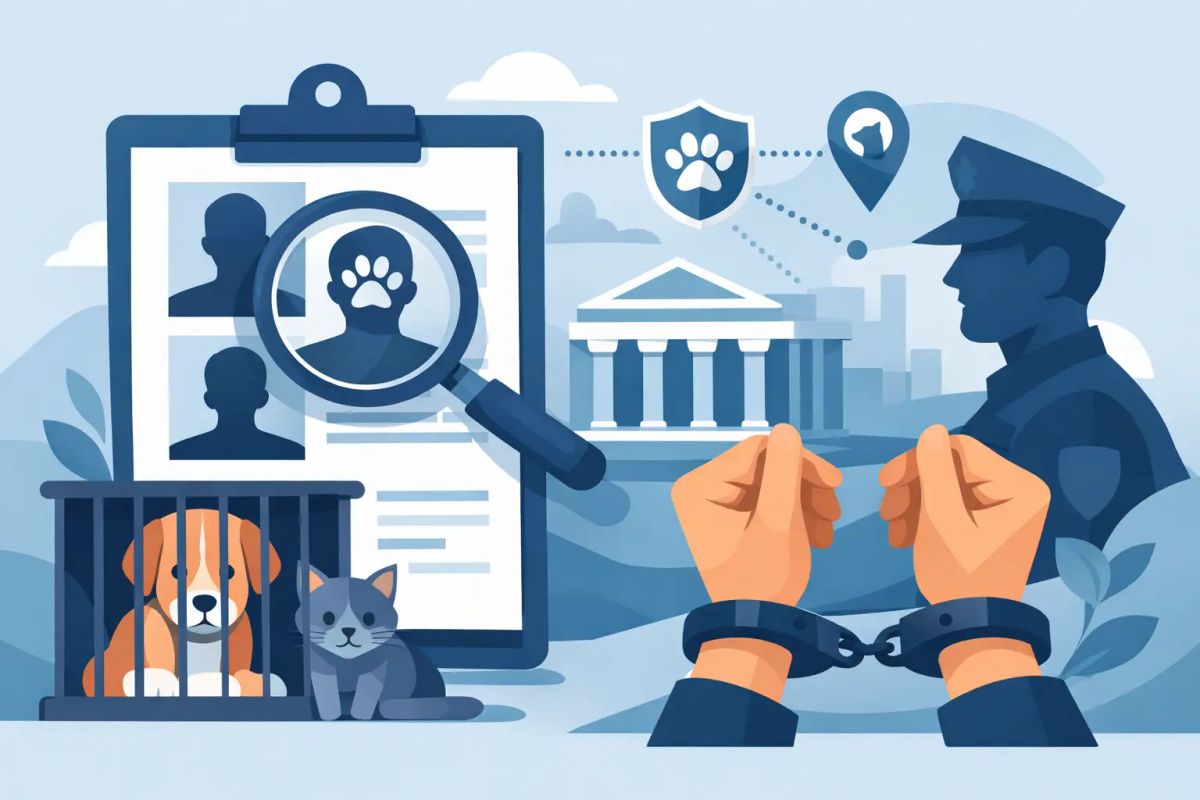
When someone is convicted of abusing an animal, the public should not be left in the dark. A public animal offender registry exists for one reason: accountability. It gives communities access to information that is often scattered, overlooked, or difficult to find, and it treats animal cruelty as the serious public concern it is.
Animal abuse is not a private mistake with private consequences. It is a documented act of violence. It can signal dangerous behavior, expose failures in enforcement, and put more animals at risk if offenders are allowed to move through communities without scrutiny. Public access to offender information changes that equation. It creates visibility where too often there has been silence.
What a public animal offender registry actually does
At its core, a public animal offender registry gathers verified information about individuals convicted of animal cruelty offenses and makes that information accessible to the public. That sounds simple, but the impact is larger than the mechanics.
A registry helps residents make informed decisions. It helps advocates track patterns. It helps journalists report with specificity. It helps policymakers see where current laws fall short. Most of all, it reinforces a basic principle: cruelty should carry lasting public consequences, not just a case number buried in a courthouse archive.
That does not mean every registry looks the same or serves the same legal purpose. Some are state-run. Some are created by advocacy organizations focused on public awareness and reform. Some include broad offense histories, while others are limited to certain convictions or reporting standards. The details matter because a registry is only as credible as its sourcing, verification, and scope.
Why public access matters
Animal cruelty cases are often treated as isolated incidents. They are not. A person who has harmed one animal may seek access to others through adoption, fostering, employment, breeding activity, or informal ownership arrangements. When that history is hard to find, the burden falls on shelters, rescues, landlords, neighbors, and community members to uncover it on their own.
A public animal offender registry shifts that burden. It makes accountability visible instead of optional.
That visibility serves several public interests at once. First, it can act as a deterrent. Not every offender is dissuaded by public exposure, but some are. Second, it gives organizations handling animal placements a clearer basis for screening. Third, it supports a culture where cruelty is treated as a matter of public safety and moral concern, not as a minor offense that disappears after sentencing.
There is also a democratic value here. Public records exist for a reason. When a conviction involves violence against an animal, communities have a legitimate interest in knowing that information. Transparency is not punishment for its own sake. It is a safeguard.
The case for a public animal offender registry in Nevada
In Nevada, where communities continue pushing for stronger protections and more serious treatment of abuse cases, a public animal offender registry can serve as both a practical tool and a policy signal. It tells the public that cruelty matters. It tells offenders they will not be shielded by fragmented records or weak public awareness. And it tells lawmakers that residents expect systems built around prevention, not just reaction.
For a state that values public accountability, this is a logical step. Registry access can support shelters, rescue groups, advocates, and everyday residents who want more than outrage after the fact. They want mechanisms that reduce risk before another animal is harmed.
That is one reason organizations such as Nevada Animal Advocates have centered registry work within a larger push for reform. The registry itself is useful, but its larger power is what it represents: a refusal to let abuse disappear into paperwork.
What critics get right, and where they fall short
Any serious discussion of registries has to deal with trade-offs. A public database tied to criminal convictions raises legitimate questions about accuracy, fairness, and scope. Those questions should not be dismissed.
The strongest criticism is that a registry can become harmful if it includes unverified allegations, outdated records, or incomplete case details. That is true. A registry must be built on confirmed information, clear standards, and regular review. Without that, it risks undermining public trust and exposing people to misinformation.
Another concern is whether public identification actually prevents future abuse. The honest answer is that it depends. A registry alone will not stop cruelty. It is not a substitute for strong prosecution, meaningful sentencing, mental health intervention where appropriate, responsible ownership restrictions, or enforcement by animal control and law enforcement agencies. If policymakers treat a registry as the only reform needed, they are missing the point.
But these limits are not arguments against registries. They are arguments for doing them correctly and placing them within a broader accountability system. Public access works best when it complements stronger laws, better data collection, and clear enforcement consequences.
There is also a fairness argument tied to rehabilitation. Some people contend that once a sentence is served, public exposure should end. That position may carry weight in some contexts, but animal cruelty deserves a harder look. These offenses involve vulnerable victims and often reveal serious disregard for suffering. Communities should not be forced to ignore that history when animals may again be placed in an offender's care. The public interest does not vanish at sentencing.
What makes a registry credible
A registry only serves the public if people can trust it. Credibility starts with sourcing. Information should be based on verifiable convictions, not rumor, social media claims, or unresolved accusations. It also requires clarity about what is included, how often records are updated, and whether removals or corrections are possible when warranted.
Good registry design is not about spectacle. It is about reliability.
That means the information presented should be understandable and limited to what serves public accountability. It should identify the offense clearly enough to be useful without turning the platform into sensational content. There is a difference between transparency and exploitation, and serious advocacy organizations should know that difference.
A credible registry also benefits from consistency. If one county reports aggressively while another lags, the public gets a distorted picture. That is why registry efforts often expose a second problem: uneven enforcement and uneven reporting. In that sense, a registry does more than list offenders. It reveals where the system itself is failing.
Why this issue goes beyond animal welfare
Animal abuse is often framed as a niche issue. It is not. Cruelty intersects with public safety, violence prevention, and community health. People who minimize animal abuse as secondary or symbolic miss what repeated research and frontline experience have shown for years: harm to animals can exist alongside broader patterns of abuse and control.
That does not mean every animal cruelty offender poses the same level of risk in every context. It does mean these crimes should not be dismissed as trivial. A society that treats violence against defenseless animals as minor is signaling something dangerous about what it is willing to tolerate.
A public registry helps correct that signal. It communicates that cruelty carries social weight. It places animal abuse where it belongs - in the category of conduct that demands visibility, scrutiny, and consequence.
What real reform requires
A registry matters, but it should push a larger agenda. Real reform means stronger cruelty statutes, better charging decisions, improved coordination between agencies, and meaningful restrictions on future animal ownership where justified. It means treating animal abuse records as relevant information for shelters, rescues, and courts. It means refusing the routine downgrading of cruelty cases into forgettable offenses.
It also means public engagement. Laws do not strengthen themselves. Systems do not become transparent on their own. Communities have to demand that abuse be documented, prosecuted, and made visible.
That is where registry work has lasting value. It does not just inform the public. It organizes public will. It gives people a factual basis for asking harder questions about who is protected, who is overlooked, and why cruelty still slips through gaps that should have been closed years ago.
Animals cannot report abuse, file complaints, or demand stronger laws. People have to do that work for them. A public animal offender registry is one way to make sure that work is grounded in facts, not fading headlines. And when the system tries to move on too quickly, public accountability keeps the record where it belongs - in plain view.