
Animal Cruelty Registry Comparison That Matters
Published by Nevada Animal Advocates
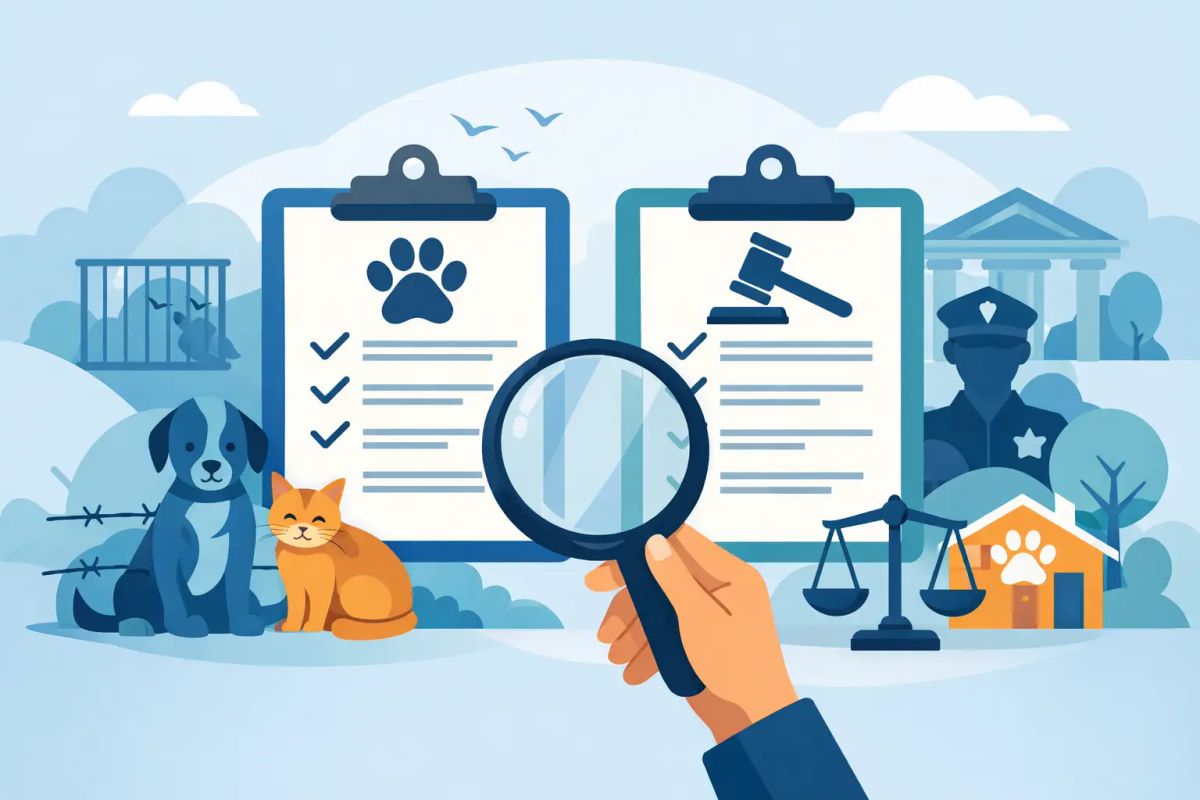
A person convicted of cruelty should not be able to move quietly to another county, acquire another animal, or present themselves as a trusted caretaker without meaningful scrutiny. That is the central question behind any animal cruelty registry comparison: does a registry create real public accountability, or does it merely create the appearance of it?
Registries are not all built for the same purpose. Some are limited local tools. Some rely on voluntary reporting. Others are tied to criminal convictions and enforceable restrictions. The difference matters because animals remain vulnerable when laws, courts, agencies, and communities cannot see a documented pattern of abuse.
What an Animal Cruelty Registry Is Meant to Do
At its strongest, an animal cruelty registry is a public-safety and accountability mechanism. It identifies people who have been convicted of qualifying animal cruelty offenses and makes that information accessible under clear legal standards. The purpose is not public spectacle. It is to help prevent future harm, support enforcement of animal-ownership restrictions, and give residents, shelters, rescues, employers, and animal-control agencies information they may need to make responsible decisions.
Animal cruelty is not a private matter without consequences beyond the victim. Research and frontline experience have repeatedly connected serious animal abuse with broader patterns of violence, coercion, and household instability. A registry cannot resolve every risk, but it can close a dangerous information gap.
For Nevada, the issue is especially clear. A statewide system would be more useful than scattered local records because cruelty offenders do not necessarily stay in one city or county. Accountability should not disappear at a jurisdictional boundary.
Animal Cruelty Registry Comparison: The Features That Count
The most meaningful difference between registries is not their name. It is whether they are complete, enforceable, current, and designed for public use without sacrificing basic legal fairness.
Statewide coverage versus local patchwork
A municipal or county registry can offer an important starting point, especially where local leaders are willing to act before the state legislature does. But local systems have an obvious limitation: they only capture offenses prosecuted within that jurisdiction. An offender can relocate, obtain animals elsewhere, or interact with organizations that have no reason to check a registry outside their own area.
A statewide registry creates a single standard and a single point of access. It also gives law enforcement, prosecutors, animal-control officers, and animal welfare organizations a common tool. That does not eliminate the need for local enforcement, but it makes enforcement less dependent on geography.
Convictions versus allegations
This is where responsible registry design matters most. A credible public registry should be based on qualifying convictions, not accusations, online claims, or unverified reports. Animal cruelty must be taken seriously, and so must due process. Publishing allegations before a case is resolved can harm innocent people, compromise investigations, and weaken public trust in the registry itself.
A conviction-based system is more defensible because it rests on an established legal outcome. The law should clearly define which offenses require registration, whether misdemeanor and felony convictions are treated differently, and how long a person remains listed. These details should be decided in statute or regulation, not left to inconsistent interpretation.
Useful information versus excessive exposure
A registry must contain enough information to identify a listed offender accurately. At minimum, that generally means the person’s name, conviction information, jurisdiction, date of conviction, and the period of required registration. If animal-ownership restrictions were imposed, the public and relevant agencies need to know that as well.
At the same time, a registry should not be designed to invite harassment or vigilantism. Publishing unnecessary personal details can create legal and safety problems without improving animal protection. The goal is informed decision-making and enforceable consequences, not retaliation. A system that cannot draw that line is vulnerable to challenge and less likely to endure.
Passive information versus enforceable restrictions
Some registries simply publish names. That can raise awareness, but awareness alone is not prevention. A stronger model connects registry status to court-ordered restrictions, probation conditions, adoption screening, breeding or commercial-animal licensing decisions, and compliance checks where authorized by law.
The hard truth is that a list has limited value if no one is responsible for acting on it. Courts need clear authority to impose ownership bans when warranted. Animal-control agencies need a process for identifying violations. Shelters, rescues, and breeders need lawful guidance on how registry information should affect placements or transfers. A registry becomes meaningful when it supports action before another animal is harmed.
The Gaps That Can Make a Registry Fail
A registry can be well intentioned and still ineffective. The most common failure is incomplete data. If court records are not transmitted promptly, entries are not updated, or agencies use incompatible systems, the public is left with outdated information and false confidence.
Another problem is unclear responsibility. One agency must be accountable for maintaining the database, correcting errors, processing required updates, and responding when a person fails to register. Without designated funding and oversight, registries can become neglected mandates on paper.
Accessibility also matters. If a database is difficult to search, buried in government systems, or written in legal language that ordinary residents cannot understand, it will not serve the public. People seeking to adopt out an animal, report a suspected violation, or understand a court restriction need a clear process. Public information should be usable, not merely technically available.
Finally, registry laws must anticipate legitimate questions about removal and correction. If a conviction is overturned, the record should be removed quickly. If identifying information is wrong, there must be a defined correction process. Fair procedures do not weaken accountability. They protect the integrity of a system that must withstand legal scrutiny and public scrutiny alike.
What a Strong Nevada Model Should Require
Nevada does not need a symbolic registry built to generate a headline. It needs a statewide public accountability tool backed by law, adequate resources, and consistent enforcement. The strongest approach would require reporting after qualifying convictions, establish a clear registration period, and make ownership restrictions visible when ordered by a court.
It should also require coordination among courts, prosecutors, law enforcement, animal-control agencies, and the state entity responsible for the registry. Each handoff is a potential failure point. A person should not avoid registration because a judgment was not transmitted, an agency was unaware of the requirement, or no one had authority to follow up.
The law should distinguish among offense levels and circumstances. A single case involving neglect may require a different response than repeated cruelty, torture, animal fighting, or violations committed while a person was already prohibited from possessing animals. Proportionality is not softness. It is how a law remains credible while recognizing the seriousness of aggravated and repeated harm.
A well-designed registry should also be paired with stronger prevention measures. Training for officers and prosecutors, clear animal seizure procedures, cross-reporting where legally appropriate, and support for victims in violent households all strengthen the system around the registry. No database can carry the full burden of animal protection by itself.
How Residents Can Use Registry Information Responsibly
Public access creates civic responsibility. Registry information should be used to protect animals and report suspected violations through proper channels, not to encourage harassment, threats, or private retaliation. If someone appears to be violating a court-ordered ownership ban, the right response is documentation and a report to the appropriate enforcement agency.
Animal welfare organizations can also use reliable conviction information as one part of a careful screening process. It should never replace judgment, reference checks, facility inspections, or compliance with applicable law. A registry identifies known legal findings. It cannot reveal every risk, every uncharged act, or every future threat.
For journalists and policymakers, registry data can expose systemic problems that individual cases obscure. Are cruelty cases being reduced to minor charges? Are ownership prohibitions being requested and enforced? Are certain areas seeing repeated failures to investigate? Transparency gives the public a basis to demand answers.
Accountability Must Be Built to Last
The real measure in an animal cruelty registry comparison is whether the system makes it harder for convicted abusers to regain access to vulnerable animals without scrutiny. A list that is incomplete, inaccessible, or disconnected from enforcement will not meet that test.
Nevada Animal Advocates supports public accountability because animals deserve more than public outrage after harm is done. They deserve laws that identify risk, consequences that can be enforced, and a public system built to prevent the next act of cruelty before it happens.