
Why Animal Forensic Standards Protect Justice
Published by Nevada Animal Advocates
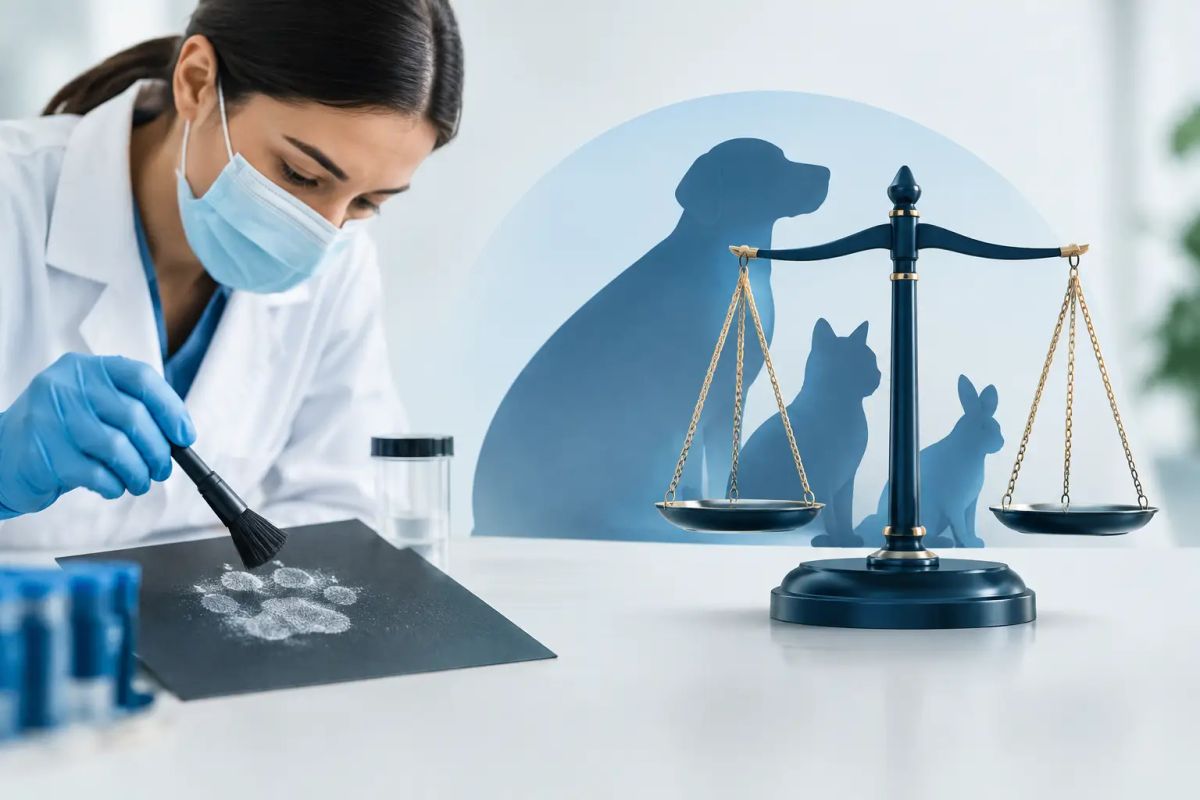
A cruelty case can fail long before a judge or jury hears it. A carcass may be moved without documentation. Injuries may be photographed poorly. Evidence may be stored incorrectly. A veterinarian’s findings may be clinically sound but never translated into a clear forensic opinion. Animal forensic standards exist to prevent those failures - and to ensure that suffering is met with evidence strong enough to demand accountability.
For animal welfare advocates, animal forensic standards are not a technical side issue. They are a justice issue. When investigators, veterinarians, laboratories, prosecutors, and agencies follow consistent procedures, they give abused animals a real chance at protection under the law. They also protect the integrity of the process for everyone involved.
What Animal Forensic Standards Actually Do
Animal forensics applies scientific methods to questions raised in suspected cruelty, neglect, fighting, poisoning, illegal killing, and other offenses involving animals. The work may include scene assessment, evidence collection, veterinary examination, necropsy, toxicology, behavioral records, imaging, and expert testimony.
Standards provide the framework for doing that work reliably. They establish how evidence should be identified, documented, collected, preserved, analyzed, and presented. Without that framework, an investigation can become vulnerable to avoidable claims of contamination, incomplete documentation, bias, or unsupported conclusions.
The central question is not simply whether an animal was harmed. It is whether the facts can establish what happened, when it happened, who was responsible, and whether the evidence can withstand scrutiny in court.
This distinction matters in neglect cases especially. An animal’s thin body condition, untreated wound, infected eyes, lack of shelter, or absence of water may be visible to anyone. But a criminal case often requires more: precise observations, medical findings, records of the animal’s environment, proof of ownership or custody, and a documented timeline. Standards turn alarming conditions into evidence that can support lawful consequences.
Animal Forensic Standards Must Be Consistent
There is no single nationwide rulebook that automatically governs every animal cruelty investigation. Requirements can differ among states, agencies, laboratories, and courts. Yet credible animal forensic work rests on core practices that should not be optional merely because a case involves an animal rather than a human victim.
Preserve the scene before evidence disappears
The location where an animal is found can reveal as much as the animal’s condition. Empty water containers, accumulated waste, inaccessible food, broken fencing, inadequate shelter, drug paraphernalia, weapons, restraints, medications, and digital records may all carry evidentiary value.
Investigators must document the scene before conditions are changed. That means photographs and video taken methodically, notes that identify where each item was found, and records that distinguish observation from assumption. If an officer gives an animal water immediately to prevent further suffering, that may be necessary and humane. It should also be documented, because it changes the scene.
The trade-off is real: responders must protect a living animal without losing the information needed to prove why intervention was necessary. Clear procedures make it possible to do both.
Maintain a documented chain of custody
Evidence is only as credible as its documented handling. Chain of custody records show who collected an item, when it was collected, how it was packaged, where it was stored, who transferred it, and when it reached a laboratory or courtroom.
This can include physical items such as food, water, medications, weapons, restraints, bedding, biological samples, and animal remains. It can also apply to digital evidence, including photographs, surveillance footage, text messages, veterinary records, and social media posts.
A missing signature or unexplained gap will not automatically destroy every case. But weak custody records create openings for defense challenges and can prevent a fact-finder from trusting evidence that may otherwise be compelling. Agencies need training, forms, secure storage, and supervisory review to make proper handling routine rather than dependent on individual memory.
Use veterinary findings that answer legal questions
Veterinarians are essential to animal cruelty investigations, but clinical care and forensic evaluation serve different purposes. A treating veterinarian focuses first on relieving suffering and restoring health. A forensic veterinarian must also identify injuries, assess body condition, consider alternative explanations, establish possible timelines, collect samples, and explain findings in language that a court can understand.
A complete forensic examination documents both what is present and what is absent. For example, a report should not simply state that an animal was emaciated. It should describe body condition, muscle loss, hydration, coat quality, parasites, dental condition, medical disease, available food, and any records that could explain or contradict the finding.
This rigor protects against two unacceptable outcomes: excusing deliberate neglect as an accident without investigation, or overstating conclusions that the evidence cannot support. Justice requires moral clarity, but it also requires scientifically honest testimony.
Protect evidence through qualified laboratory practices
Toxicology and other laboratory testing can be decisive in poisoning, drug exposure, illegal euthanasia, neglect, and death investigations. Samples must be selected, preserved, labeled, and transported properly. A sample collected too late, stored at the wrong temperature, or sent without adequate case history may produce little useful information.
Laboratory findings also require careful interpretation. Detecting a substance does not always establish the dose, timing, source, or intent of exposure. Expert opinions should explain the limits of the testing, not hide them. Prosecutors and advocates are best served by evidence that is clear about what it proves and what it cannot prove.
Why Weak Standards Hurt Animals and Communities
When animal cruelty investigations are inconsistent, the consequences extend beyond a single case. Offenders may avoid accountability. Animals may be returned to unsafe conditions. Prosecutors may decline charges because the evidence is incomplete. Communities may lose confidence that reports of cruelty will be taken seriously.
Poor investigations can also obscure patterns. Repeated calls to the same address, recurring veterinary neglect, multiple deceased animals, or animal fighting indicators may reveal escalating harm. If agencies do not reliably capture and share lawful records, those patterns are easier to miss.
Animal abuse is not a private inconvenience. It can coexist with violence, intimidation, family abuse, unsafe breeding operations, and other public safety concerns. That does not mean every cruelty case predicts another crime. It means every credible report deserves competent investigation, and every substantiated case deserves a response proportionate to the harm.
Public accountability tools also depend on accurate case information. A statewide animal abuse registry must be grounded in verified legal outcomes and clear inclusion standards, not rumor or online accusation. Transparency is strongest when it respects due process while refusing to let convictions disappear into inaccessible records.
What Stronger Practice Requires in Nevada
Nevada has communities with dedicated animal control officers, law enforcement personnel, veterinarians, shelters, and advocates. Commitment, however, cannot substitute for statewide consistency. Resources vary, caseloads are heavy, and rural jurisdictions may face particular barriers related to distance, staffing, evidence transport, and access to specialized veterinary expertise.
Better animal forensic practice requires sustained public investment and policy attention. It means agencies should have written protocols for seizure, photographs, body-condition scoring, evidence packaging, emergency veterinary care, necropsy decisions, and digital evidence preservation. It means responders need recurring training rather than one-time instruction. It means prosecutors should be brought into complex cases early enough to identify evidentiary gaps before they become fatal.
It also means that agencies need a path to qualified experts when cases involve mass neglect, animal fighting, suspected poisoning, severe injury, or unexplained death. Not every jurisdiction can employ a forensic veterinarian or maintain a full laboratory capacity. Regional partnerships and shared protocols can close that gap, but only if leaders treat animal cruelty enforcement as a serious responsibility.
Nevada Animal Advocates supports the principle behind this work: public transparency and meaningful consequences require facts that can stand up to scrutiny. A conviction record is only as reliable as the investigation that produced it. Strong standards help ensure that accountability is earned through competent evidence, not weakened by preventable error.
What the Public Can Do Without Compromising a Case
Community members often provide the first report, photograph, video, or witness account in a cruelty investigation. That contribution can be vital, but residents should avoid trespassing, confronting a suspected offender, removing animals without legal authority, or posting unverified accusations as fact.
Instead, record what can be safely observed from a lawful location: dates, times, conditions, vehicle descriptions, the number and apparent condition of animals, and any immediate danger. Preserve original photos and videos where possible. Report urgent concerns to law enforcement or the appropriate animal control authority, and seek emergency assistance when an animal faces imminent harm.
The public should also demand more than sympathetic statements after a cruelty case becomes news. Ask whether evidence protocols exist, whether personnel receive specialized training, whether convictions are tracked, and whether repeat offenders are visible to the systems responsible for protecting animals. Accountability begins with a report, but it must continue through investigation, prosecution, sentencing, and public awareness.
Animals cannot document their own injuries, preserve a crime scene, or explain the conditions they endured. People must do that work for them - carefully, credibly, and with the resolve to insist that cruelty is treated as the serious offense it is.