
Can Animal Abusers Adopt Pets Legally?
Published by Nevada Animal Advocates
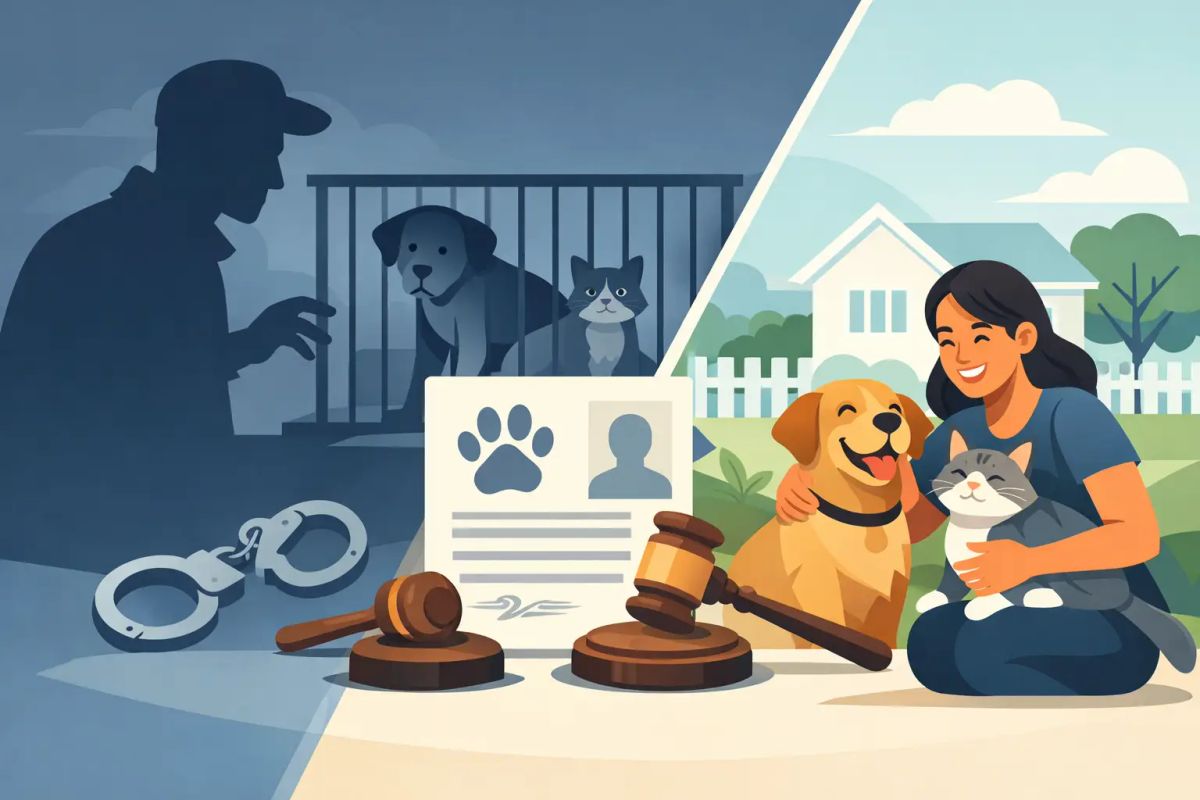
A cruelty conviction should answer a basic public safety question: should this person be allowed to get another animal? Yet when people ask, can animal abusers adopt pets legally, the honest answer is often frustratingly unclear. In many cases, yes - unless a court order, state law, or shelter policy specifically blocks it.
That gap is exactly why this issue matters. Animal abuse is not a minor paperwork offense. It is a documented act of harm against a vulnerable living being. When legal systems fail to create real barriers after that harm, animals remain at risk and communities are left relying on inconsistent screening, limited records, and luck.
Can animal abusers adopt pets legally under current law?
In the United States, there is no single national rule that permanently bars every convicted animal abuser from owning or adopting pets. Laws vary by state, and even within a state, the practical outcome can depend on the exact charge, the sentence imposed, and whether the person tries to adopt through a shelter, rescue, breeder, pet store, or private seller.
Some courts can prohibit an offender from possessing animals for a set period of time. In more serious cases, bans may last for years and occasionally longer. But those restrictions are not automatic everywhere, and they are not always permanent. If no ownership ban is ordered, or if the ban expires, a person may be legally able to acquire another animal.
That is the core problem. Legality is not the same as safety.
Why the answer is often yes
Animal cruelty laws punish conduct. They do not always create long-term prevention systems. A person may be convicted, serve a sentence, pay fines, complete probation, and still face no durable statewide barrier to obtaining another pet. Even when judges have authority to impose ownership restrictions, that authority may be used unevenly.
Enforcement is another weak point. A ban on animal ownership only works if someone knows it exists and has a way to verify it. Many shelters and rescues do careful screening, but they do not all have access to the same information. Private rehoming situations are even looser. A person can acquire an animal through informal channels with little to no background review.
This is where transparency matters. If cruelty records are scattered across court systems, local agencies, and incomplete databases, prevention becomes guesswork. Public accountability tools can help close that gap by making known offenders easier to identify before another animal is placed at risk.
What actually stops a convicted abuser from getting another animal?
Usually, one of three things has to happen.
First, a court can order a possession or ownership ban. This is the strongest direct legal restriction, but its length and scope vary. Some orders prohibit owning, living with, caring for, or residing where animals are kept. Others are narrower. If the order is vague, enforcement becomes harder.
Second, state law can impose collateral consequences after certain cruelty convictions. In some jurisdictions, that means restrictions tied to felony offenses or repeat violations. In others, there is no meaningful automatic barrier beyond the sentence itself.
Third, shelters and rescues can deny adoption applications based on criminal history, prior animal welfare issues, home checks, references, or other risk indicators. This is common, but it is a policy choice, not a universal rule. One organization may deny an applicant that another would approve.
That unevenness explains why asking whether animal abusers can adopt pets legally does not produce a simple yes or no. It depends on the law, the sentence, the source of the animal, and whether anyone has access to the relevant record.
Shelters can refuse adoption, but private sales are a loophole
Adoption is only one path to animal ownership. Even if reputable shelters screen aggressively, a convicted abuser may still obtain an animal through a breeder, online listing, flea market, acquaintance, or direct private transfer. Those transactions often involve far less scrutiny.
This matters because public discussion sometimes assumes shelters are the main gatekeepers. They are not. They are only one part of the ecosystem. If lawmakers want real prevention, reform cannot stop at shelter discretion. It has to address access across the board, especially where records are hard to check and transactions happen quickly.
A registry can be relevant here, not because it replaces law enforcement, but because it gives the public and placement organizations a practical way to identify risk. Nevada Animal Advocates has centered this exact issue: abuse prevention requires visibility, not just outrage after the fact.
The role of registries and public records
A statewide animal abuse registry does not create punishment by itself. What it does create is public notice. That matters more than critics often admit.
Without accessible records, a cruelty offender can move from one county to another, apply under a slightly different version of a name, or approach a private individual who has no idea there is a documented abuse history. Public-facing accountability changes that dynamic. It gives shelters, rescues, neighbors, journalists, and advocates a tool to ask harder questions before another animal is harmed.
There is a trade-off, of course. Any registry has to be accurate, current, and tied to real adjudicated offenses rather than rumor or accusation. Due process matters. So does maintenance. A sloppy database helps no one. But when built around verified convictions and clear standards, public transparency serves a basic protective function.
Why stronger laws are still needed
A registry or shelter policy can help, but neither substitutes for clear law. If a convicted abuser can legally regain access to animals with minimal barriers, the system is still failing at prevention.
Stronger laws can do several things. They can require courts to consider mandatory ownership bans after cruelty convictions. They can lengthen those bans for severe or repeat offenses. They can define possession broadly enough to prevent obvious evasions, such as keeping the animal in another household member's name while still controlling the animal's care. They can also improve data-sharing so shelters, rescues, and enforcement agencies are not operating in the dark.
Not every case is identical. A neglected livestock case, an organized dogfighting case, and a one-time misdemeanor involving failure to provide veterinary care may raise different sentencing questions. But recognizing differences between cases does not justify a system with no reliable safeguards. Serious abuse should trigger serious restrictions.
What people should understand before rehoming an animal
If you are placing an animal directly, legality is not the only question you should ask. Someone may technically be allowed to get a pet and still be a dangerous choice.
Ask for a full name and identification. Check public court records where available. Ask for a veterinary reference if the person has owned animals before. Speak to the landlord if housing is rented. If the person becomes evasive, hostile, or oddly rushed, treat that as relevant information, not a personality quirk.
This is not paranoia. It is basic diligence. Animals cannot vet the people who take them home. Humans have to do that work.
What policymakers and advocates should press for
If the public wants a real answer to the question can animal abusers adopt pets legally, the legal system has to stop producing so many evasive half-answers. Reform should aim for clarity and enforcement.
That means pushing for mandatory post-conviction ownership prohibitions in serious cases, better statewide tracking of cruelty convictions, stronger cross-reporting between courts and animal welfare agencies, and public access to verified offender information. It also means treating animal cruelty as an indicator of broader public safety concerns, not an isolated issue beneath legislative attention.
Weak consequences send a message. They tell offenders that abuse may carry temporary inconvenience but not lasting accountability. Stronger laws send a different one: if you harm animals, access to animals is no longer your choice to make.
For residents, reporters, and community advocates, the most useful posture is not passive concern but informed pressure. Ask what your state law actually requires. Ask whether courts are using available ownership bans. Ask whether shelters have the tools they need to screen applicants. Ask why a convicted abuser should ever be allowed to quietly start over with another vulnerable animal.
Animals depend on systems they cannot influence and laws they cannot invoke. When those systems leave obvious openings, prevention becomes a public responsibility. The right question is not only whether animal abusers can legally adopt pets. It is why the law still makes that possible so often.