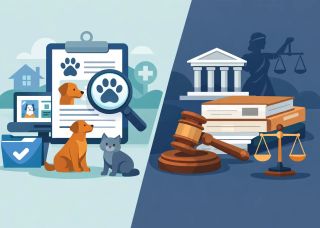
How to Research Cruelty Convictions in Nevada
Published by Nevada Animal Advocates

A cruelty allegation can spread quickly. A verified criminal conviction is different: it is a legal finding with a case number, court record, and defined outcome. Knowing how to research cruelty convictions helps residents, journalists, advocates, and policymakers demand accountability without repeating claims that cannot be substantiated.
The work requires patience. Animal cruelty cases may involve multiple agencies, amended charges, plea agreements, dismissed counts, or records that are not immediately available online. Treat accuracy as part of advocacy. When the public record is clear, it strengthens the case for meaningful consequences and better laws.
Start by Defining What You Need to Confirm
Before searching, separate the questions. Are you trying to confirm that a person was charged, convicted, sentenced, or prohibited from owning animals? Those facts are related, but they are not interchangeable.
A charge means prosecutors formally accused someone of an offense. A conviction means the person was found guilty by a judge or jury, or entered a guilty or no-contest plea that resulted in a judgment of conviction. A case can also end in dismissal, acquittal, diversion, or a plea to a different offense. Reporting a charge as a conviction is inaccurate and can harm both public trust and the people involved.
Write down what you know before beginning: the person's full name and possible spelling variations, the county or city, the approximate date of the incident, and any animal control, law enforcement, or court agency involved. Even one reliable detail can narrow a search substantially.
In Nevada, cruelty cases may be prosecuted at the municipal, justice, or district court level depending on the charge, location, and case circumstances. A misdemeanor case may appear in a different court system than a felony case. Do not assume a search of one court portal tells the whole story.
How to Research Cruelty Convictions Through Court Records
Court records are the strongest source for determining whether a conviction exists. Begin with the court that likely handled the case. Search public case indexes using the defendant's name, where available, and review every matching result carefully. Common names create obvious risks, so compare the case location, filing date, age or identifying details when publicly listed, and charge description.
The docket, sometimes called a register of actions, is often the most useful record. It shows the procedural history of the case: when charges were filed, hearings occurred, pleas were entered, and judgment or sentencing took place. Look for entries that expressly state a guilty plea, guilty verdict, judgment of conviction, sentence, or disposition.
A docket shorthand can be confusing. “Closed” does not automatically mean convicted. “Disposed” simply means the court has reached some outcome. “Plea” may refer to a not-guilty plea at arraignment rather than a guilty plea later in the case. If the entry is unclear, obtain the final judgment, sentencing order, or minute order from the clerk whenever possible.
The charging document also matters. It identifies the statute or ordinance alleged and can show whether the conduct was charged as animal cruelty, neglect, abandonment, unlawful possession, or another offense. But it is only the starting point. Compare the original charge with the final disposition because plea negotiations can change the offense of conviction.
When requesting records, ask for specific documents rather than making a broad request for “everything.” A practical request might seek the complaint or information, docket, judgment of conviction, sentencing order, and any animal ownership or possession restriction. Courts may charge copying fees, require a case number, or limit access to sealed or confidential materials.
Read the Outcome, Not Just the Headline
News coverage can alert the public to a case, especially when an arrest or animal seizure occurs. It should not be your final proof. Initial reports may rely on allegations, preliminary police statements, or information that changes as the case moves through court.
Use news reporting to locate dates, agencies, names, and case numbers, then verify the final result through court documents. If a story says someone “faced” animal cruelty charges, that does not establish a conviction. If it says someone “was sentenced,” find the sentencing record and confirm the offense attached to that sentence.
Pay close attention to the date. A person may have a prior conviction, a newly filed case, and an unrelated civil or administrative proceeding at the same time. Each should be described separately. Precision prevents confusion and keeps public accountability grounded in evidence.
Sentencing records can reveal whether the court imposed jail time, fines, probation, counseling, restitution, community service, or conditions related to animal care and possession. Those conditions are central to public-safety advocacy. A conviction without a meaningful restriction may expose a gap between the seriousness of the offense and the protections available to animals and communities.
Use Agency Records Carefully
Animal control agencies, police departments, sheriffs' offices, and prosecutors may hold records that add essential context. Incident reports, citations, search warrant materials, inspection reports, photographs, veterinary evidence, and seizure records can establish the scope of an investigation. Some materials may be available through public-records requests; others may be exempt, redacted, or unavailable while an investigation or prosecution is active.
Agency records can explain what happened, but they do not replace the court's final disposition. An arrest report reflects probable cause allegations. A press release may describe charges at the time of filing. Neither document should be described as proof of guilt unless a court record confirms the conviction.
When making a public-records request, be direct and narrow. Identify the incident date, address if appropriate, report number, involved agency, and the records sought. Ask whether responsive records have been withheld or redacted and under what legal basis. A denial is not always the end of the matter, but it is a reason to refine the request, not to speculate about what the record might contain.
Verify Identity and Respect Legal Boundaries
The public has a legitimate interest in verified cruelty convictions, particularly where animal possession restrictions, repeat offenses, or systemic enforcement failures are involved. That interest does not justify careless identification or public harassment.
Confirm that the defendant in the court file is the same person discussed in agency records or public reporting. Names can be shared by many people. Middle initials, dates, addresses, aliases, and court case numbers can help distinguish records, but use only information lawfully available and relevant to the accountability purpose.
Do not publish home addresses, personal contact information, information about minors, or details sealed by a court. Do not encourage others to confront a defendant, their family, witnesses, or agency personnel. Public accountability means insisting on transparent systems and enforceable consequences, not creating a parallel system of intimidation.
Be especially cautious with cases involving protective orders, juvenile proceedings, mental-health information, or records that have been sealed, expunged, or otherwise restricted. Public access rules vary by court and record type. When in doubt, report only what you can verify through an official, lawfully accessible source.
Build a Record Others Can Check
Strong advocacy leaves a trail. Keep a research log with the case number, court name, search date, document title, disposition date, and exact language supporting your conclusion. Save copies of public documents where permitted, and distinguish clearly between a court record, an agency statement, and media coverage.
If you publish findings, use straightforward wording. “Court records show a conviction for [offense] entered on [date]” is materially different from broad claims about a person's character or unverified conduct. Quote the record when the wording is significant, especially for ownership bans, probation terms, or plea dispositions.
Nevada Animal Advocates supports public-facing accountability because information hidden in fragmented systems cannot protect animals effectively. A statewide registry and stronger reporting standards can make verified conviction information easier for communities, shelters, landlords, employers, and policymakers to find and evaluate within lawful limits.
Turn Verified Facts Into Civic Pressure
Research should lead to action beyond one case. If court records show repeated cruelty cases, weak sentences, missing ownership restrictions, or inconsistent reporting, document the pattern. Patterns help explain why legislative reform, better enforcement protocols, and accessible conviction records are necessary.
Share verified concerns with elected officials, prosecutors, local agencies, and public-interest journalists. Ask focused questions: Was an animal possession prohibition requested? How is compliance monitored? Are repeat offenders identified across jurisdictions? Are agencies reporting final dispositions in a form the public can access?
The goal is not simply to find a name in a database. It is to make sure the legal system treats cruelty as the serious public-safety and animal-welfare issue it is. Careful research gives advocates facts that cannot be dismissed, and facts put pressure on institutions to act.