
Animal Registry Versus Court Records Explained
Published by Nevada Animal Advocates
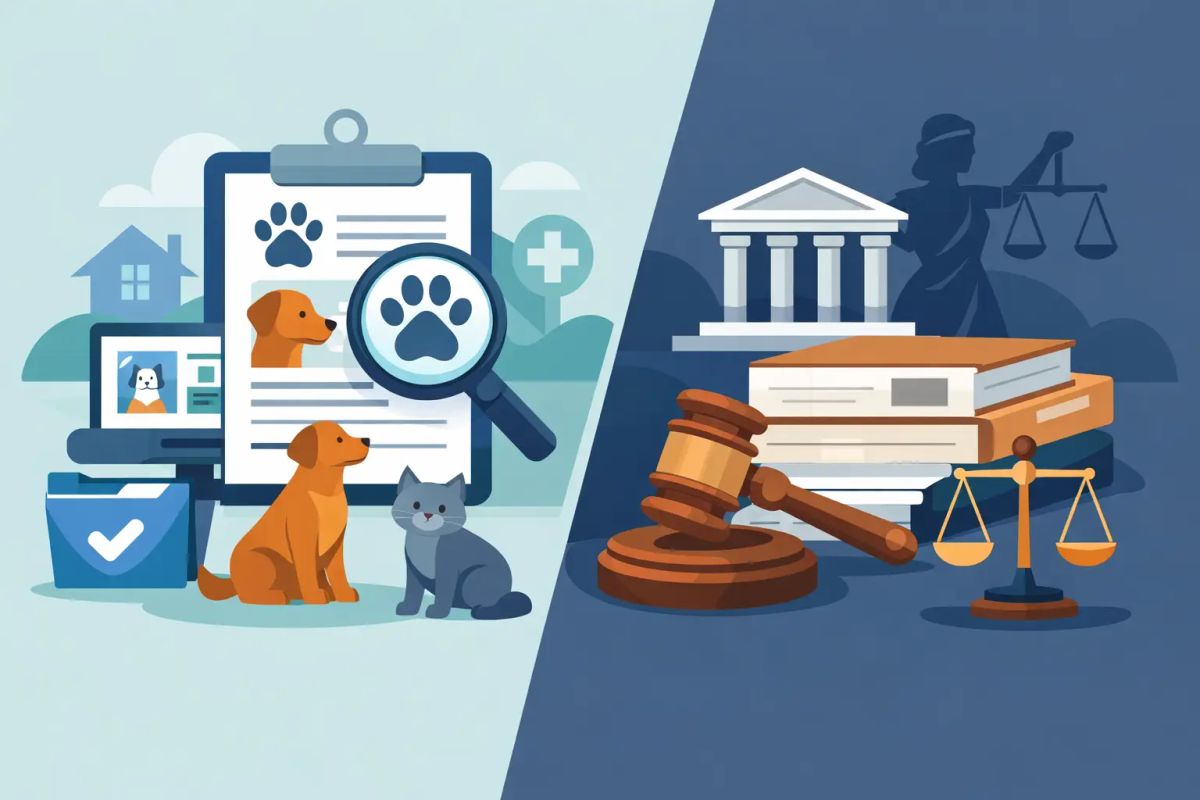
A cruelty case can exist in a courthouse file and still remain effectively invisible to the people most affected by it. That is the central issue in the animal registry versus court records debate. Court records document legal proceedings. A well-designed animal abuse registry makes relevant, verified accountability information easier for the public to find, understand, and use.
The distinction matters because animal cruelty is not a private inconvenience. It is a public-safety and community-accountability issue. Residents, rescues, landlords, employers, journalists, and policymakers need reliable ways to understand whether cruelty offenses have resulted in meaningful consequences. A court record may contain the answer, but finding it is often far harder than it should be.
Court Records Are Legal Files, Not Public Awareness Tools
Court records are created to serve the justice system. They preserve filings, hearings, pleas, judgments, sentencing orders, and other procedural events in a case. Their primary purpose is legal documentation, not plain-language public education.
That function is necessary. A court file can provide the most complete account of how a case moved through the system, including allegations, defense arguments, evidentiary disputes, charge reductions, dismissals, and final dispositions. For attorneys, reporters, researchers, and advocates reviewing a specific case, these details can be indispensable.
But a record being technically public does not make it meaningfully accessible. People may need to know the correct court, case number, legal name, date range, or jurisdiction before they can begin a search. Online access varies by court. Some documents are difficult to locate, use legal terminology, or require an in-person request. A person trying to determine whether an individual has a qualifying animal cruelty conviction may face a fragmented process across municipal, justice, district, or appellate courts.
Court records can also be confusing without context. A charge is not a conviction. An arrest is not proof of guilt. A case marked as closed does not, by itself, explain whether the defendant was convicted, acquitted, diverted, or had charges dismissed. Public accountability requires accuracy, and accuracy requires more than a search result.
What an Animal Abuse Registry Adds
An animal abuse registry is not meant to replace the court system. It is a public-facing accountability tool built around information that has already passed through a legal process. Its role is to organize qualifying records into a clear, searchable format so the public can identify documented offenders without becoming experts in court databases.
The strongest registries focus on final, verifiable outcomes, such as convictions or other legally defined qualifying dispositions. They should identify the jurisdiction, offense, disposition date, and any relevant restrictions when the law permits disclosure. They should also make clear what the registry does not show. That restraint protects the integrity of the resource.
For community members, the difference is practical. A court database may show a case under a docket number with abbreviated codes and multiple filings. A registry can show whether a person meets the criteria for inclusion and why. That clarity does not eliminate the need for legal records. It gives the public a realistic entry point to accountability.
For animal welfare organizations, a registry can help identify patterns that isolated court files conceal. Repeated offenses, geographic gaps in enforcement, weak sentencing outcomes, and recurring failures to enforce animal ownership bans become harder to ignore when information is visible in one place. Visibility creates pressure for better policy.
Animal Registry Versus Court Records: The Core Differences
The difference is not simply convenience. It is purpose.
Court records are comprehensive, procedural, and case-specific. They can include a wide range of information, including allegations that were never proven and filings that have little relevance to a public safety decision. They are governed by court rules, access policies, privacy protections, and due-process requirements.
An animal abuse registry is selective, standardized, and public-interest focused. It should communicate a defined category of verified information under transparent inclusion rules. Rather than asking a resident to interpret a full legal file, it answers a narrower question: Has this person been found guilty of a qualifying animal cruelty offense or otherwise met the registry's lawful criteria?
That selectivity is a strength only when the standards are clear. A registry cannot become a rumor board, a social media accusation list, or a substitute for investigation. Entries must be grounded in official records, reviewed carefully, updated when outcomes change, and subject to a correction process. Public trust depends on those safeguards.
Why Both Sources Matter
A registry and court records serve different public needs, and responsible advocacy recognizes both.
Someone considering whether to place an animal with a prospective adopter, foster, employee, or volunteer may need a fast, understandable accountability resource. A registry can offer that starting point. A journalist investigating how a cruelty case was handled may need the underlying court filings and sentencing documents. A policymaker assessing whether current penalties deter repeat abuse may need both registry data and court-level case records.
The same principle applies when the facts are disputed. If a registry entry references a qualifying conviction, the court record remains the source for deeper legal context. If the court record has been sealed, expunged, corrected, or otherwise restricted by law, the registry must respond accordingly. Transparency is not strengthened by publishing outdated or unlawful information. It is strengthened by publishing accurate information with clear rules.
The Due Process Line Cannot Be Ignored
Animal advocates are right to demand consequences for cruelty. That demand is strongest when it respects due process rather than bypassing it.
Publicly labeling a person as an animal abuser based only on an accusation, an arrest, or a viral post can cause serious harm and undermine legitimate reform efforts. Criminal cases can change quickly. Charges may be amended, dismissed, or resolved in ways that do not support registry inclusion. A credible registry should state its eligibility standards plainly and distinguish allegations from adjudicated outcomes.
Due process is not a loophole for cruelty. It is the standard that makes accountability defensible. When a registry relies on verified legal outcomes, it gives advocates, officials, and residents a resource that can withstand scrutiny. It also directs public frustration where it belongs: toward laws, policies, and enforcement failures that allow proven cruelty to go without meaningful consequences.
What Strong Registry Policy Looks Like
A statewide registry requires more than a searchable name list. It needs a legal framework that defines qualifying offenses, identifies the agency responsible for administration, establishes verification procedures, and provides a timely method to correct errors. It should address how long entries remain public, how changes in court status are handled, and whether repeat offenses trigger enhanced reporting or restrictions.
Lawmakers must also decide what problem the registry is meant to solve. If the goal is public awareness, the system should be easy to search and written in plain language. If the goal includes preventing prohibited animal possession, agencies need a way to coordinate enforcement. If the goal is better policy analysis, the registry should be structured to reveal trends without exposing information that is not necessary for public safety.
There are trade-offs. A registry with overly broad criteria risks unfairness and legal challenge. One with criteria so narrow that it excludes serious, verified cruelty conduct may offer little protection. The right approach depends on statutory authority, privacy law, court practices, and the specific failures a state is trying to correct. What should not be negotiable is a commitment to accuracy, transparency, and enforceable consequences.
Public Access Is Part of Prevention
Animal cruelty often flourishes where systems are fragmented and consequences are hidden. When case information is difficult to find, residents cannot easily ask whether an ownership ban was enforced, whether repeat offenders were identified, or whether a sentence matched the severity of the harm.
A public registry cannot prevent every act of cruelty. Neither can a court record. But together, they can make accountability more visible. Court records preserve the legal truth of a case. Registries translate qualifying outcomes into information the public can act on. That combination gives communities a stronger basis to demand enforcement, support legislative reform, and refuse to treat animal abuse as a minor offense.
Nevada Animal Advocates supports tools that turn public concern into public accountability. The next time a cruelty case disappears behind a docket number, the question should not be whether the information exists. It should be why the people working to protect animals cannot readily see what justice required and whether it was delivered.