
Animal Cruelty Court Records Explained
Published by Nevada Animal Advocates
A cruelty case does not end when the headlines fade. If the public wants to know what actually happened - what charges were filed, whether the case was reduced, dismissed, or prosecuted seriously - animal cruelty court records are often the clearest place to look.
That matters because abuse thrives in silence and weak accountability. Court records can show whether a case moved through the system with real consequences or whether warning signs were minimized. For advocates, journalists, neighbors, and policymakers, access to these records is not about curiosity. It is about public safety, institutional transparency, and whether the justice system is treating violence against animals as the serious offense it is.
What animal cruelty court records usually include
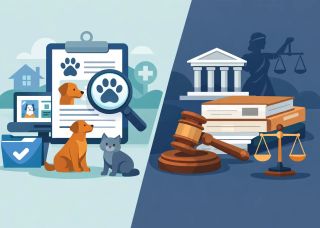
The phrase sounds simple, but animal cruelty court records can refer to several different documents created at different stages of a case. In many jurisdictions, the public record may include a criminal complaint, citation, charging document, docket entries, hearing dates, motions, plea agreements, sentencing orders, and final judgments.
Some records are more revealing than others. A docket might only show procedural steps, while a filed complaint may describe the alleged conduct in enough detail to make the seriousness of the abuse clear. A sentencing order can show whether the court imposed jail time, probation, counseling, animal ownership restrictions, restitution, or no meaningful consequences at all.
This is one reason advocates should be cautious about drawing fast conclusions from one screenshot or one case status line. A case labeled closed does not tell you whether justice was served. You need the underlying records, or at least a broader view of the file, to understand the outcome.
Why these records matter beyond one case
Animal abuse is not an isolated private matter. It is a violence issue with documented links to household abuse, neglect, intimidation, and broader public safety concerns. When court records are available and understandable, communities can see patterns that would otherwise remain hidden.
That transparency serves several public interests at once. It helps journalists report accurately instead of relying on rumor. It helps advocates identify repeat offenders, weak plea practices, and enforcement gaps. It helps policymakers assess whether existing laws carry real consequences or merely symbolic language. It also gives community members a way to verify whether a person accused or convicted of cruelty faced restrictions that should matter to shelters, rescues, and the public.
There is also a deeper civic point here. Laws mean little if enforcement is inconsistent and outcomes are opaque. Court records create a paper trail. That paper trail is often the only way to measure whether anti-cruelty laws are being used as intended.
Animal cruelty court records are public - but not always easy to access
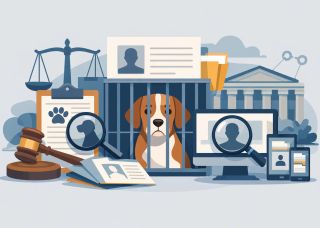
In principle, many court records are public. In practice, public access can be uneven, fragmented, delayed, or confusing. Some courts provide searchable online dockets. Others require in-person requests, written requests, or payment for copies. Some systems reveal only minimal case data unless you appear at the clerk's office.
Even when a record is technically public, barriers still matter. A rural resident, a reporter on deadline, or an advocate tracking multiple cases may not be able to visit a courthouse during business hours. Search tools may use inconsistent naming conventions. Cases may be filed under statutes that are not obvious to nonlawyers. If a defendant's name is misspelled or a charge is amended, a basic search can miss the record entirely.
That gap between formal access and real access is one of the reasons public accountability tools matter. If communities are expected to monitor cruelty enforcement, they need information systems that ordinary people can actually use.
What may be missing from the record
Public records are powerful, but they are not perfect. Some documents may be sealed. Juvenile matters are often treated differently. Personal information may be redacted. In some cases, the record will show only the legal framing, not the full facts investigators observed.
There is also the issue of timing. An arrest report, an animal control investigation, and a criminal case do not move on the same schedule. A person may be publicly accused long before the court file reflects the full course of events. On the other hand, a plea agreement may reduce a charge in a way that obscures the original severity of the conduct unless earlier filings are also reviewed.
That is why record review requires care. Public accountability does not mean reckless interpretation. It means reading what the record actually says, identifying what it does not say, and resisting the urge to pretend the file is more complete than it is.
How to read court records without missing the real story
The first mistake people make is focusing only on the charge title. "Animal cruelty" can cover a wide range of conduct depending on the statute and jurisdiction. The real substance may appear in the complaint narrative, probable cause statement, or sentencing terms.
The second mistake is treating a plea as proof that the original allegations were unimportant. Plea deals happen for many reasons, including resource constraints, evidentiary issues, or negotiation habits that have little to do with the harm suffered by the animal. A reduced offense may reflect legal compromise, not moral clarity.
The third mistake is reading one case in isolation. If the same offender appears in multiple matters, if possession bans are absent, or if probation conditions are weak across similar cases, the pattern may be more important than any single file. For reform advocates, patterns are where systemic failure becomes visible.
Why public registries and court records work together
Court records are the foundation. Registries can make that accountability legible to the public.
A statewide registry focused on animal abuse offenses does not replace the courts. It translates scattered public information into a format communities can use. That has practical value. Shelters, rescues, landlords, neighbors, journalists, and voters should not have to be legal researchers to understand whether someone has a documented cruelty history.
This is where public-interest infrastructure matters. Nevada Animal Advocates has built its work around the principle that awareness alone is not enough. Accountability requires systems. Court records tell the legal story, while a registry can help the public see recurring risk, identify outcomes, and push for stronger enforcement where those records show failure.
There are fair limits here. Any registry or public database must be accurate, updated responsibly, and grounded in verifiable records. Due process matters. But so does visibility. When cruelty offenses disappear into courthouse silence, communities lose the ability to respond, protect animals, and demand reform.
What stronger access to animal cruelty court records should look like
If states are serious about prevention, they should treat animal cruelty case information as a public accountability priority, not an afterthought. That means searchable online records, plain-language case data, consistent offense labeling, and records that show meaningful outcomes rather than cryptic codes.
It also means better coordination across agencies. Animal control, law enforcement, prosecutors, and courts often operate in separate silos. The result is a public record that is technically available but practically disjointed. Better systems would allow communities to understand not just that a case exists, but how it moved from investigation to disposition.
Stronger access should not be mistaken for punishment by publicity. The point is not spectacle. The point is that abuse cases carry real consequences for animals, households, and community safety. Public institutions should not hide how they handle them.
When animal cruelty court records are accessible, understandable, and connected to broader accountability tools, they do more than document the past. They expose where the system works, where it fails, and where the public has every right to demand better.