
How Does an Animal Abuse Registry Work?
Published by Nevada Animal Advocates
When someone is convicted of abusing an animal, the case should not disappear into a court file that the public never sees. That is the basic question behind how does an animal abuse registry work: it creates a public record of certain animal cruelty offenders so communities, advocates, and policymakers can see patterns, track accountability, and push for stronger prevention.
An animal abuse registry is not a symbolic gesture. At its best, it is a public accountability tool. It gives people access to information that may otherwise be hard to find, especially when abuse cases are spread across different courts, agencies, or local jurisdictions. It also sends a clear message that cruelty is not a private matter and should not be treated as a minor lapse in judgment.
How does an animal abuse registry work in practice?
In practical terms, a registry collects and publishes information about people who have been found guilty of qualifying animal cruelty offenses. The exact rules depend on the law or organization operating it, but the process usually starts with a criminal case, not a rumor, accusation, or social media claim.
That distinction matters. A credible registry is built on verifiable case information such as court records, sentencing outcomes, dates of conviction, and the legal basis for inclusion. The point is public transparency, not vigilantism. If a registry includes people without a legal standard for listing them, it loses legitimacy quickly and may create serious due process problems.
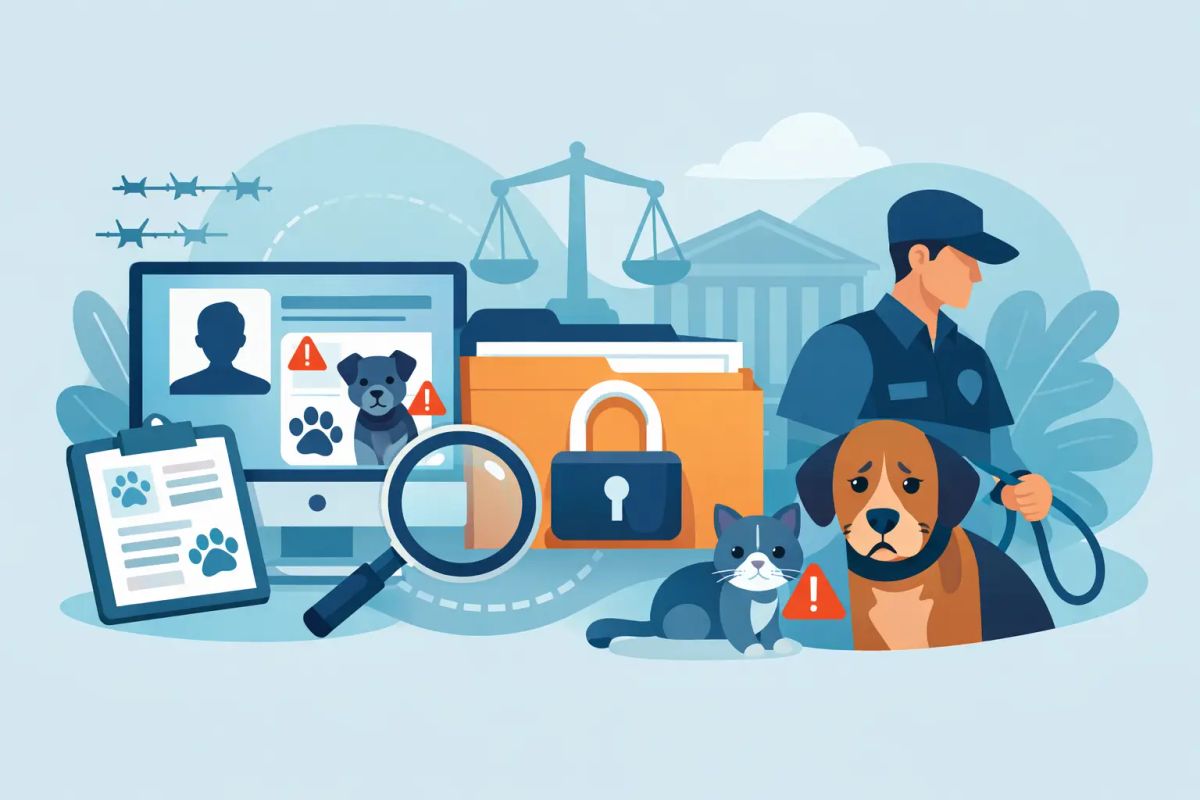
Once a qualifying conviction is identified, the registry entry may include the offender's name, age, city or county, offense details, date of conviction, and sometimes a photo if legally available. Some registries also note whether the offense involved neglect, abandonment, torture, organized abuse, or repeat conduct. The more precise the information, the more useful the registry is to the public.
What information usually appears on the registry?
A serious registry is designed to inform, not sensationalize. That means the information should be relevant to public accountability and public safety concerns. Most often, a listing includes identifying details, the nature of the offense, the court handling the case, and the period of time the person remains on the registry.
The time limit is a key issue. Some proposals call for fixed terms based on the severity of the offense. Others argue repeat offenders should remain listed longer because repeated cruelty is a stronger indicator of ongoing risk. A one-size-fits-all approach may sound simple, but it can ignore meaningful differences between cases.
For example, a misdemeanor neglect case and a felony torture case do not carry the same public safety implications. Any registry that treats all conduct as identical risks being both unfair and ineffective. The stronger approach is a structured one, where listing rules reflect the seriousness of the offense and the offender's history.
Conviction-based listings matter
If a registry is going to hold up under public scrutiny, it should rely on convictions or other clearly defined legal findings. That protects the integrity of the registry and helps avoid misuse. Allegations alone are not enough.
This is one of the most important guardrails in the system. Public accountability works best when it is tied to documented facts. Otherwise, a registry can become vulnerable to legal challenges and public distrust.
Public access is part of the point
A registry that exists but is hard to search has limited value. Public access is what turns court outcomes into community awareness. Journalists, employers in animal-related fields, rescue organizations, landlords, neighbors, and lawmakers may all use the information differently, but the common purpose is visibility.
That visibility can also help identify patterns that would otherwise be missed. A person with multiple incidents across different jurisdictions may not stand out if records stay fragmented. A registry can make repeat abuse harder to overlook.
Why supporters argue registries are necessary
Animal abuse is often minimized, even when the facts are brutal. Supporters of registries reject that minimization. They argue that cruelty should carry lasting consequences because animals are vulnerable, abuse can escalate, and communities have a legitimate interest in knowing when someone has been convicted of harming animals.
There is also a broader public interest argument. Animal cruelty does not always exist in isolation. Many advocates, researchers, and law enforcement professionals have long pointed to links between animal abuse and other forms of violence. That does not mean every offender will go on to harm people, but it does mean society has reason to take these crimes seriously.
A registry can also support practical decision-making. Shelters, rescues, breeders, pet sellers, and boarding facilities may want a way to screen for known offenders when placing animals or offering services. Families may want to know whether someone in a position of trust has a history of cruelty. Policymakers may use registry data to show that abuse is not rare, isolated, or harmless.
Where the system gets complicated
Even if the goal is straightforward, implementation is not. A registry only works if the underlying data is accurate, current, and maintained with care. Outdated listings, duplicate records, missing case details, and unclear standards can undermine the whole project.
There is also a legal balance to consider. Public registries are meant to increase accountability, but they must still respect due process, statutory limits, and privacy rules where applicable. This is why sound policy design matters more than slogans. If lawmakers want a registry that survives scrutiny, they need clear definitions of which offenses qualify, how names are added, how long listings remain active, and how errors are corrected.
Appeals and removals are another part of the equation. People need a process to challenge inaccurate listings. That is not a weakness. It is part of what makes a registry credible. Accountability tools should be firm, but they should also be accurate.
Not every registry has the same legal status
Some registries are established directly by law. Others are advocacy-driven public databases built from court records and publicly available case information. That difference affects how the registry is managed, what information can be included, and what enforcement mechanisms exist behind it.
A government-created registry may have formal statutory authority, mandatory reporting requirements, and defined penalties for noncompliance. An advocacy-based registry may serve a different but still powerful role by increasing visibility, organizing public information, and building pressure for legislative reform. Nevada Animal Advocates operates in that public accountability space, where transparency is not treated as optional.
What an animal abuse registry does not do
A registry is not a substitute for strong prosecution. It does not rescue animals from immediate danger. It does not replace inspections, better law enforcement training, or tougher sentencing standards. And by itself, it does not prevent every future offense.
That is the trade-off people sometimes miss. A registry is a tool, not a full solution. It works best when combined with stronger cruelty laws, better reporting systems, meaningful penalties, and public education that rejects the idea that abuse is a low-priority crime.
There is also the question of scope. If registry criteria are too narrow, serious offenders may never appear. If criteria are too broad, the system may become harder to defend and maintain. Good policy requires judgment.
How does an animal abuse registry work as a prevention tool?
Its preventive value comes from visibility and consequences. When offenders know a cruelty conviction can remain publicly visible, the punishment does not end quietly at sentencing. That public record can affect access to animals, community trust, and future scrutiny.
Prevention also works at the institutional level. Registries can help shelters and rescues make safer placement decisions. They can help lawmakers identify where abuse cases are increasing or where enforcement is weak. They can give journalists and advocates a factual base to challenge the routine downgrading of cruelty offenses.
Most of all, a registry helps correct a long-standing failure: the tendency to treat abuse as forgettable. A public listing says the opposite. It says these cases matter, victims matter, and communities are entitled to transparency.
That is why the question is bigger than database mechanics. How does an animal abuse registry work? It works by turning hidden case records into public accountability, and by insisting that cruelty deserves consequences people can actually see. If we want animal protection laws to mean something, the public cannot be kept in the dark.