Preventing Repeat Animal Abuse Offenses
Published by Nevada Animal Advocates
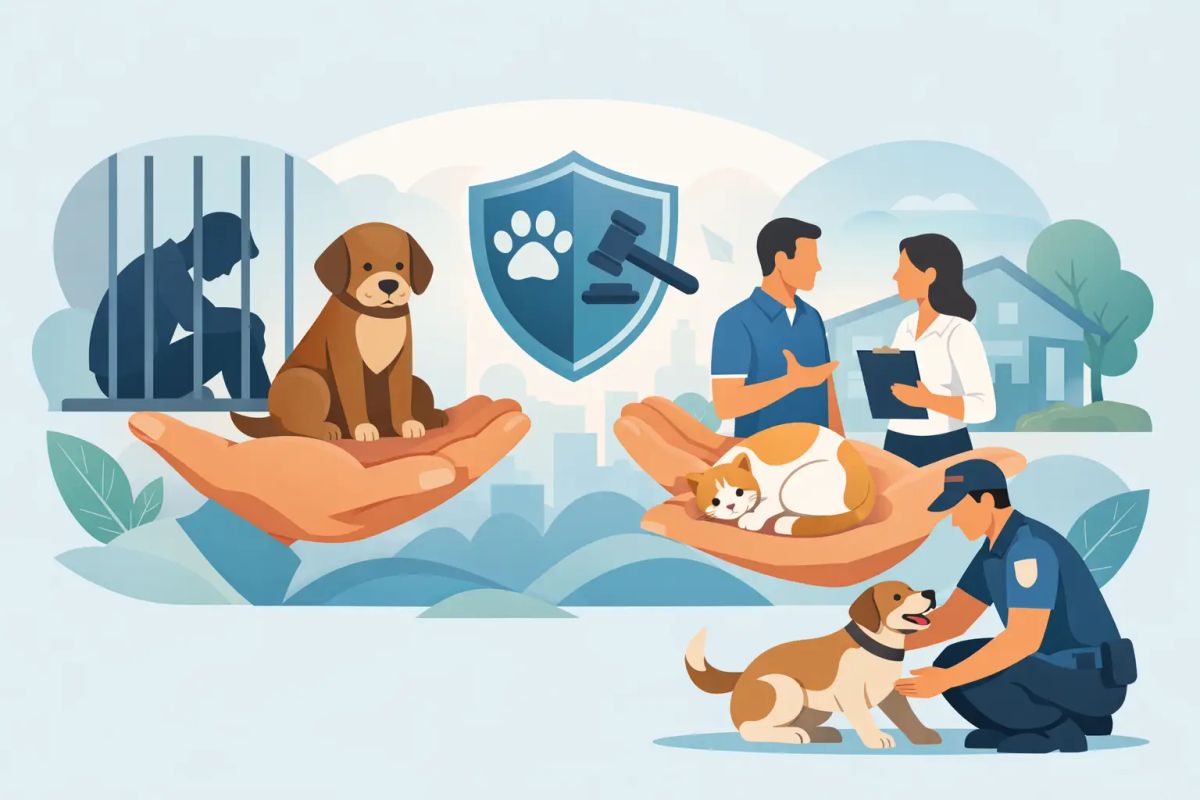
A first cruelty conviction should never be treated as a one-time lapse with no broader warning. When the system minimizes abuse, animals pay for it again. Preventing repeat animal abuse offenses means recognizing a simple truth: past cruelty is one of the clearest indicators of future harm, and public systems should respond accordingly.
Too often, the response to animal abuse is fragmented. A case is charged, a sentence is handed down, and then visibility disappears. That gap matters. If there is no meaningful tracking, no public accountability, and no consistent enforcement of ownership restrictions or probation terms, repeat offenses become easier to commit and harder to stop.
Why preventing repeat animal abuse offenses requires system change
Animal abuse is not a private matter. It is a public safety issue, a justice issue, and a test of whether institutions are willing to treat cruelty as serious conduct rather than a minor side issue. Repeat offenses do not happen in a vacuum. They happen when penalties are weak, records are hard to access, and oversight ends long before risk does.
There is also an uncomfortable reality behind many repeat cases: the offender was often known to the system before another animal was harmed. A prior conviction, complaint history, or documented pattern may have existed, but it was scattered across agencies, buried in court files, or unavailable to the public. When information stays hidden, prevention fails.
That is why reform cannot stop at stronger rhetoric. It has to include structures that make accountability real. Registries, court-ordered restrictions, enforceable monitoring, and coordinated reporting are not symbolic measures. They are practical tools for interrupting repeat abuse.
What actually reduces repeat abuse
There is no single fix. Preventing future cruelty depends on whether the response matches the level of risk. In some cases, education and supervision may help. In others, especially where there is severe neglect, torture, hoarding, organized cruelty, or repeated violations, the only credible response is stricter legal consequence and longer-term restriction.
A serious prevention strategy starts with sentencing that reflects the offense. When courts impose minimal penalties for clear abuse, the message is obvious: the system does not view the conduct as dangerous enough to warrant meaningful intervention. That weakens deterrence and leaves room for the same person to acquire or access more animals.
It also requires usable records. Public-facing offender information, when grounded in due process and accurate court outcomes, can help shelters, rescues, landlords, neighbors, employers in animal-related fields, and concerned community members make informed decisions. Transparency is not about public spectacle. It is about reducing the chance that known abusers move through the community without scrutiny.
Another key measure is enforcing bans on animal ownership or possession. Courts may issue restrictions, but those orders only matter if someone checks compliance. An abuser who is prohibited from having animals should not be able to quietly return to ownership because no agency is tasked with follow-up.
The role of an animal abuse registry
A statewide registry is not a cure-all, but it fills one of the most damaging gaps in the current system: the gap between conviction and public awareness. If an individual has been found guilty of qualifying animal cruelty offenses, that information should not be functionally invisible.
A registry creates visibility that can prevent harm before it happens again. It can alert organizations and individuals who place, sell, foster, transport, or house animals. It can support journalists and policymakers tracking patterns. It can also help communities understand that abuse is not isolated when the same names keep surfacing in different contexts.
The trade-off is that registries must be built carefully. Standards for inclusion should be clear, tied to actual convictions or qualifying legal findings, and backed by reliable administration. A poorly maintained system can create confusion. A well-run one strengthens accountability and makes enforcement harder to evade.
For advocacy groups such as Nevada Animal Advocates, this is the point. Public accountability works best when it is more than outrage. It needs infrastructure.
Why weak enforcement keeps the cycle going
Many repeat offenders do not reoffend because no one knew better. They reoffend because consequences were partial, delayed, or easy to work around. Charges may be reduced. Monitoring may never happen. Agencies may treat cruelty complaints as low priority unless the abuse is extreme and impossible to ignore.
That pattern has costs. It burdens law enforcement with repeat calls, puts shelters and rescues at greater risk of unknowingly transferring animals to unsafe homes, and forces neighbors or family members to become the only line of defense. A prevention model that depends on chance reporting after harm occurs is not prevention. It is damage control.
The answer is not simply harsher language in statutes. It is consistent enforcement from intake to sentencing to post-conviction compliance. If probation includes mental health treatment, it should be verified. If restitution is ordered, it should be tracked. If animal possession is prohibited, violations should trigger swift consequences.
Prevention starts earlier than prosecution
By the time a criminal case is filed, an animal has already suffered. That is why preventing repeat animal abuse offenses also means improving how warning signs are identified and acted on before the next case becomes severe.
Chronic neglect, escalating complaints, hoarding conditions, repeated code violations, and unexplained disappearance of animals can all signal ongoing risk. Communities need reporting systems that are accessible, agencies that respond with urgency, and cross-reporting practices that prevent one jurisdiction from missing what another already knows.
This is especially important in cases that sit in the gray area between neglect and overt violence. Repeated deprivation of food, water, shelter, or medical care is still abuse. When those patterns are dismissed as mere irresponsibility, the system gives repeat offenders room to continue.
Early intervention also depends on training. Animal control officers, law enforcement, prosecutors, judges, social service professionals, and housing authorities should understand the behavioral patterns behind repeat cruelty and the enforcement tools available to stop it. Without shared standards, similar cases produce wildly different outcomes.
Policy reform matters because discretion is inconsistent
One county may aggressively prosecute cruelty while another treats it as a low-level nuisance. One judge may impose a meaningful ownership ban while another declines to do so. That kind of inconsistency is exactly why legislative reform matters.
Strong statutes create a floor that local discretion cannot sink below. They can define repeat offenses more clearly, require tracking mechanisms, authorize registries, strengthen probation conditions, and increase penalties when prior convictions exist. They can also close loopholes that let offenders regain access to animals through family members, informal transfers, or unregulated channels.
There is always a balance to strike. Laws should be precise, enforceable, and fair. But fairness does not mean softness toward repeat cruelty. It means applying clear standards, protecting due process, and refusing to normalize behavior that predictably leads to more suffering.
What the public can do
Preventing repeat abuse is not only the job of courts and lawmakers. Community vigilance matters, especially where official follow-through is weak. People who work with animals or place animals should screen carefully and take prior cruelty history seriously. Neighbors and witnesses should document and report concerns early rather than waiting for conditions to become catastrophic.
Journalists can help by treating animal cruelty as a public accountability issue rather than a disposable crime brief. Policymakers can ask whether existing laws actually prevent reoffense or just process it after the fact. Residents can support systems that make offender information accessible and enforcement visible.
The public should also resist the familiar pressure to frame every cruelty case as an isolated mistake. Some cases involve ignorance, crisis, or treatable instability. Others show clear disregard for suffering, repeated violations, or calculated abuse. A serious response distinguishes between those realities instead of collapsing them into the same excuse.
Animals cannot report abuse, monitor court orders, or warn the next household, rescue, or neighborhood. That responsibility falls on the rest of us. If we want fewer repeat offenders, we need more than condemnation after the damage is done. We need laws with teeth, records people can actually use, and a public willing to insist that cruelty carries consequences long after the first conviction leaves the headlines.