Why a Cruelty Offender Registry Protects Communities
Published by Nevada Animal Advocates
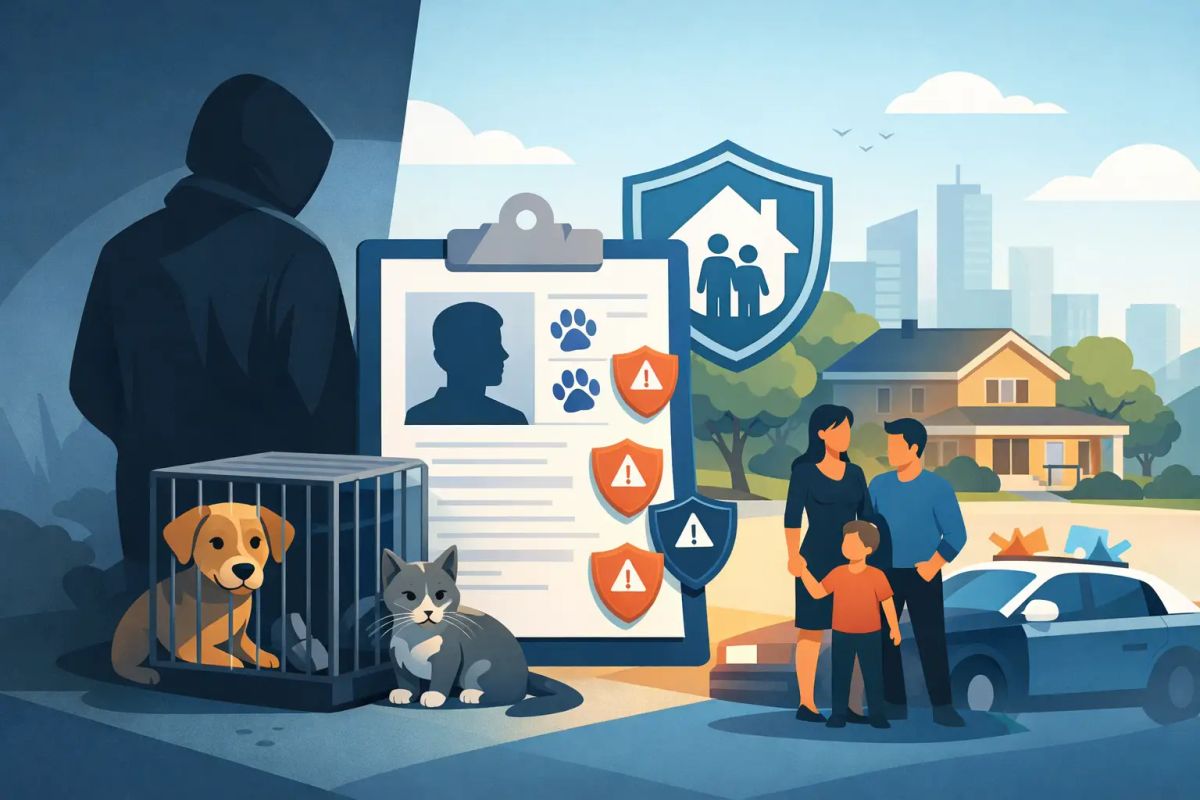
Animal cruelty is not a private matter with private consequences. A cruelty offender registry gives the public a way to recognize documented offenders, ask better questions, and demand accountability where systems have too often allowed abuse to disappear from view.
For families, rescues, landlords, employers, and animal welfare professionals, access to reliable information can help prevent another animal from being placed in danger. For policymakers, a registry exposes a larger truth: cruelty cases require more than outrage after the fact. They require transparency, meaningful enforcement, and laws built to protect animals before the next offense occurs.
What a Cruelty Offender Registry Is Meant to Do
A cruelty offender registry is a public-facing record of people convicted of qualifying animal cruelty offenses. Its central purpose is accountability. It makes information that may otherwise be buried in scattered court files easier for community members to find and understand.
That visibility matters because animal cruelty can affect far more than one animal. Research and frontline experience have repeatedly connected severe animal abuse with broader patterns of violence, coercion, neglect, and community safety concerns. A registry does not claim that every person convicted of cruelty will commit another offense or harm a person. It does recognize that documented cruelty should be treated seriously, not minimized as a personal mistake with no public relevance.
A well-designed registry can help shelters and rescue groups make informed placement decisions. It can help property owners and animal-care businesses evaluate whether someone should have access to animals. It can also help neighbors identify concerns worth reporting to the appropriate authorities rather than assuming an animal is safe because no one has spoken up.
The goal is not spectacle. The goal is prevention.
Why Public Visibility Changes the Equation
Animal cruelty often thrives in isolation. An offender may move, obtain another animal, seek work around animals, or present themselves as trustworthy to people who have no reason to know their history. When records are difficult to locate, the burden falls on the public to investigate a risk they may not even know exists.
A registry changes that imbalance. It creates a practical tool for people who need to make responsible decisions, especially when animals cannot speak for themselves. It also signals that a conviction carries consequences beyond a courtroom date.
Transparency strengthens the work of advocates because it turns individual cases into visible evidence of a systemic problem. If the same enforcement gaps, sentencing failures, or repeat-offense patterns appear again and again, the public has a stronger basis for demanding legislative reform. Lawmakers cannot credibly call cruelty a serious offense while allowing convictions to remain functionally invisible to those charged with protecting animals.
This is especially relevant when courts impose animal ownership prohibitions. A prohibition is only as effective as the ability to identify and enforce it. Without accessible records, an order barring someone from possessing animals may be difficult for shelters, rescues, and community members to recognize in practice.
A Registry Must Be Accurate, Fair, and Usable
Accountability does not require abandoning fairness. In fact, a registry that lacks clear standards will be less credible and less effective. Public trust depends on careful design.
Entries should be based on verified legal outcomes, such as qualifying convictions, rather than accusations, social media claims, or unconfirmed reports. The registry should plainly identify the offense, jurisdiction, date of conviction, and any relevant court-ordered animal restrictions. It should distinguish between charges and convictions and provide a process for correcting factual errors.
Scope matters, too. A registry should define which offenses qualify and avoid vague standards that invite arbitrary inclusion. Serious cruelty offenses, repeat offenses, organized animal fighting, and violations of court-ordered animal possession bans may warrant different treatment than lower-level cases. The law must draw those lines clearly.
There are also legitimate questions about duration. Should a listing expire after a set period? Should repeat or felony offenders remain listed longer? Should a person be eligible for removal after completing sentencing requirements and demonstrating compliance? Those decisions involve trade-offs. A short listing period may weaken prevention, while an indefinite listing without review can raise concerns about proportionality and rehabilitation.
The answer should be grounded in public safety, the seriousness of the offense, recurrence risk, and due process - not in a desire to punish indefinitely. A strong registry is not reckless. It is precise.
Privacy Is Not a Reason for Secrecy
Some critics argue that public registries are inherently unfair because they expose personal information. Privacy concerns deserve serious consideration, particularly when publishing data could create risks for victims, witnesses, or uninvolved family members.
But privacy cannot become a blanket excuse for concealing verified convictions involving abuse of vulnerable living beings. The appropriate response is to limit information to what serves a genuine public-protection purpose. A registry does not need to publish unnecessary details to be useful. It needs enough accurate information for people and organizations to identify a listed offender and make informed decisions.
The standard should be simple: disclose what protects animals and supports enforcement; withhold what does not.
What a Registry Cannot Do Alone
A cruelty offender registry is a tool, not a substitute for enforcement. It cannot investigate complaints, remove animals from dangerous conditions, prosecute a case, or ensure that a court-ordered ban is followed. Those responsibilities remain with law enforcement, animal control, prosecutors, courts, and state agencies.
It also cannot repair weak laws on its own. If cruelty statutes are vague, penalties are inadequate, or agencies lack resources, the registry will reflect those failures rather than solve them. Public visibility must be paired with stronger investigative standards, meaningful sentencing, cross-agency coordination, and adequate funding for animal protection work.
There is another limit worth acknowledging: a registry will not capture every person who harms an animal. Many cases are never reported. Some reports are not thoroughly investigated. Others do not result in charges or convictions, even when animals have suffered. That gap is not an argument against a registry. It is an argument for improving the entire accountability system around it.
How Communities Can Use Registry Information Responsibly
Public information should lead to responsible action, not harassment or vigilantism. If someone appears on a registry, residents should not threaten them, confront them, or attempt to conduct their own investigation. Those actions can endanger people, compromise cases, and distract from the welfare of animals.
Instead, use verified information to make careful decisions. Animal organizations can strengthen adoption, fostering, volunteer, and employment screening. Property owners can review applicable legal requirements before allowing animals on a property. Community members who witness suspected neglect or cruelty can document what they observe and report it through proper channels.
For journalists and advocates, registry data can also reveal whether laws are working as intended. Are repeat offenders receiving meaningful consequences? Are animal possession bans being ordered and enforced? Are certain jurisdictions seeing recurring failures in investigation or prosecution? These are public-interest questions, and they deserve public answers.
Nevada Animal Advocates supports the principle that animal abuse must be visible enough to carry real consequences. Public accountability is not an attack on fairness. It is a refusal to let proven cruelty be treated as irrelevant once a case leaves the headlines.
The Legislative Work Behind a Meaningful Registry
Creating a statewide registry requires more than launching a searchable database. Legislation must establish who maintains it, which records are included, how often entries are updated, how errors are corrected, and what agencies must report qualifying convictions. It must also address enforcement when a listed offender violates an animal ownership restriction.
A registry without reliable reporting can quickly become outdated. A registry without a correction process can lose legitimacy. A registry without consequences for noncompliance can become little more than a symbol. Effective policy anticipates these problems before they undermine the public resource.
The strongest laws also recognize that animal protection is a shared civic responsibility. Courts need clear authority. Agencies need consistent procedures. Shelters and rescues need access to usable information. Residents need a credible way to report concerns. Each part must work together if the state is serious about preventing future harm.
When animal cruelty is hidden, animals bear the risk alone. When verified convictions are visible, communities have the information and responsibility to act with care, demand enforcement, and insist that cruelty is met with consequences worthy of the harm done.