
Why Animal Abuse Should Be Public Record
Published by Nevada Animal Advocates
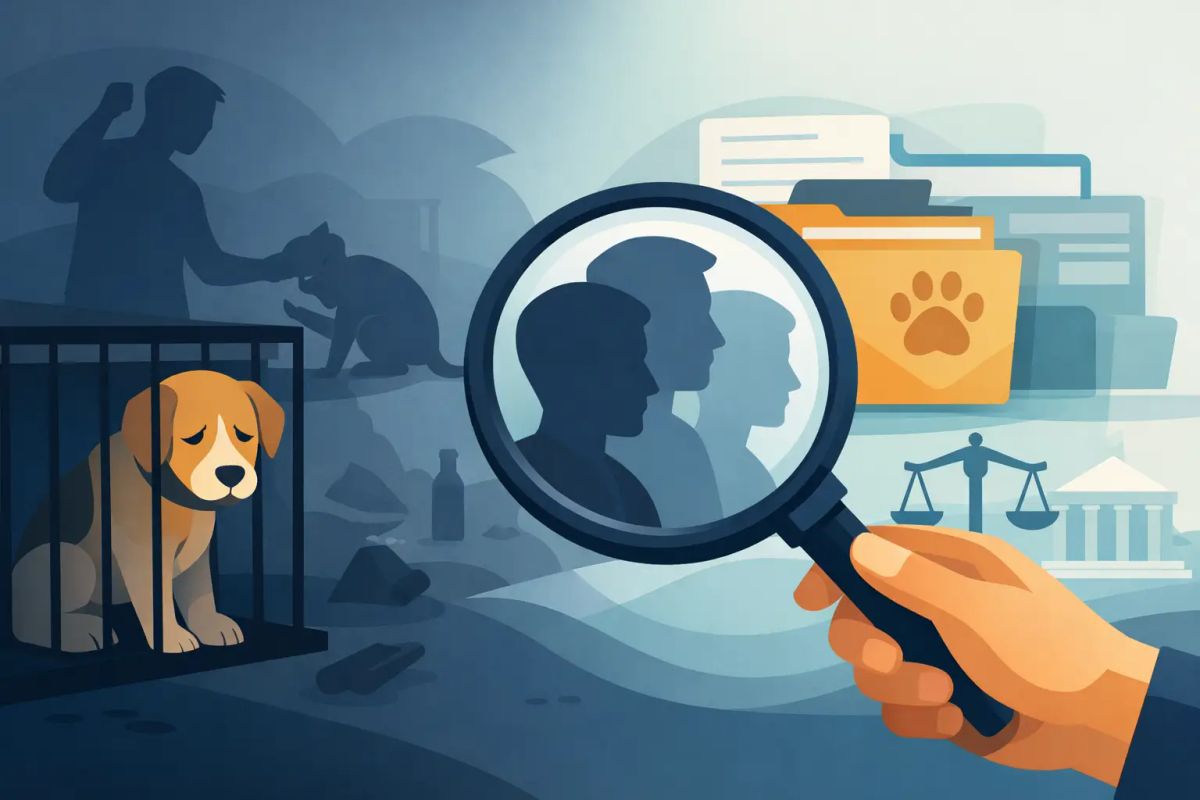
A person convicted of abusing an animal should not get to disappear back into the community without scrutiny. That is the core of why animal abuse should be public record. When cruelty is treated like a private matter with limited visibility, the risk does not vanish. It gets pushed onto neighbors, shelters, rescues, landlords, adopters, and future animals who have no way to protect themselves.
Animal abuse is not a minor lapse in judgment. It is a documented act of violence against a vulnerable living being. Public access to that information serves a clear public purpose: it helps communities make informed decisions, supports prevention, and reinforces the fact that cruelty carries lasting consequences. For an issue this serious, secrecy protects the wrong people.
Why animal abuse should be public record in the first place
Public records exist for a reason. They allow communities to see how laws are enforced, who has been convicted of serious offenses, and whether public institutions are doing their job. Animal cruelty cases should not be treated differently simply because the victim cannot speak.
When someone is convicted of abuse, that case is not only about one animal. It raises questions about future risk, household safety, and access to other animals. A public record creates transparency where it matters most. It tells shelters and rescues who they are dealing with. It gives neighbors and landlords relevant information. It allows journalists, advocates, and policymakers to identify patterns instead of reacting to isolated headlines.
Without public visibility, cruelty remains easier to minimize. That is often how repeat harm happens. Systems fail when information stays fragmented, buried in court files, or technically available but practically inaccessible.
Transparency is a prevention tool
People often talk about animal abuse after the fact, when the photos are out and the damage is done. Public records matter because they can help prevent the next case, not just document the last one.
A public-facing record can act as a practical warning system. Shelters and rescue groups routinely screen adopters and fosters. Landlords may have to decide whether an applicant with access to animals poses a risk. Families may need to know whether someone living in or around a household has a cruelty conviction. In each of these situations, public information supports better judgment.
This is especially important because animal abuse is often repetitive. It is not always a one-time event followed by permanent reform. Some offenders accumulate complaints, neglect conditions, or escalating behavior over time. When communities cannot see that history, each new interaction starts from zero. That benefits the offender, not the animals.
Transparency also has a deterrent effect. Not for everyone, and not perfectly. But public accountability changes the stakes. A conviction that remains visible sends a message that cruelty will not be quietly processed and forgotten.
Public record supports community safety, not just animal welfare
One of the strongest arguments for public access is that animal cruelty does not exist in a vacuum. There is a well-established connection between abuse of animals and other forms of violence, including domestic abuse, child maltreatment, and coercive control. That does not mean every person convicted of animal cruelty will commit other crimes. It does mean communities should not treat cruelty as irrelevant to broader safety concerns.
If a person has harmed an animal, that history can matter to people assessing risk in other settings. Advocates working in family violence, social services, law enforcement, and housing already understand that abusive behavior often crosses categories. Public records help those systems see what they might otherwise miss.
This is one reason the issue belongs in the public-interest category, not the private-shame category. The question is not whether public records make offenders uncomfortable. The question is whether withholding that information leaves others less safe. Too often, the answer is yes.
Why a registry matters when court records already exist
Some people argue that abuse cases are already part of the legal system, so there is no need for additional public tools. That sounds reasonable until you look at how difficult court data can be for ordinary people to find, understand, and use.
Records may be spread across jurisdictions, hidden behind search barriers, or written in technical language that means little to the average resident. A centralized registry or public database solves a real access problem. It turns scattered information into usable information.
That distinction matters. Information that technically exists but cannot be reasonably found is not functioning as public accountability. It is functioning as obscurity.
For organizations focused on reform, including Nevada Animal Advocates, a statewide registry is not about spectacle. It is about infrastructure. If the goal is prevention, communities need a tool they can actually use.
The case for lasting consequences
Animal abuse is often treated as if the main issue is whether someone completed a sentence, paid a fine, or served probation. Legal penalties matter, but they are not the whole picture. Public accountability addresses the broader civic consequence of a cruelty conviction.
That can make some people uneasy. They worry about permanent stigma, barriers to rehabilitation, or public overreach. Those concerns deserve a serious answer. Not every system built in the name of safety is fair by default. Any public registry should be accurate, limited to verified convictions or qualifying findings, and structured with clear rules for updates and removal where appropriate.
But the existence of trade-offs does not erase the need for transparency. The real question is how to build a system that serves the public interest without becoming arbitrary or reckless. That means due process, clear standards, and reliable data. It does not mean hiding cruelty records from the public altogether.
In practice, accountability and rehabilitation are not opposites. A person can seek treatment, comply with court orders, and change their behavior while the public still has access to truthful information about the offense. Communities are not required to pretend a conviction never happened in order to support reform.
Public access helps expose weak enforcement
There is another reason why animal abuse should be public record: it reveals how government responds to cruelty. Public records do not only identify offenders. They also show whether agencies, prosecutors, and courts are taking these cases seriously.
When records are visible, patterns emerge. Communities can see whether charges are routinely reduced, whether repeat offenders are slipping through with minimal consequences, or whether certain areas lag in enforcement. That kind of transparency is essential for legislative reform.
Without data, officials can claim progress without proving it. With public records, advocates and journalists can ask sharper questions. Are cruelty laws being enforced consistently? Are bans on animal ownership monitored? Are serious cases ending in accountability or quiet dismissal? These are public questions, and they require public answers.
The usual objections - and where they fall short
The most common objection is privacy. But a conviction for animal cruelty is not a private personal detail in the ordinary sense. It is a legal finding tied to harm against a vulnerable victim and relevant to public decision-making.
Another objection is that public records invite vigilantism. That risk should be addressed through responsible policy design, not by withholding information from everyone. We do not solve misuse by erasing legitimate public interest.
A third objection is that some cases involve neglect rather than extreme physical violence, so public exposure is too harsh. Here, the answer is nuance. States can define qualifying offenses carefully. Not every record system has to treat all conduct identically. But chronic neglect, hoarding conditions, starvation, abandonment, and failure to provide care can be deadly. The law should not pretend those harms are minor because they are less visually dramatic.
What a responsible public-record system should include
If the goal is justice rather than sensationalism, the system has to be built with discipline. Records should be based on verified legal outcomes, updated regularly, and easy for the public to understand. There should be clear criteria for inclusion, clear procedures for correcting errors, and meaningful coordination across jurisdictions.
Most of all, the system should be designed around prevention. That means it must be usable by shelters, rescues, residents, and professionals who need reliable information before placing an animal, approving a living arrangement, or assessing risk.
A public record is not a substitute for stronger enforcement, better sentencing, humane education, or intervention services. It is one piece of a broader framework. But it is a necessary piece because accountability fails when the public is kept in the dark.
Animals cannot report abuse, search court databases, or warn the next household. That responsibility falls to us. If a person has been found responsible for cruelty, communities deserve access to that truth, and animals deserve the added layer of protection that truth can provide.