
Animal Control Versus Police: Who Responds?
Published by Nevada Animal Advocates
A dog left in triple-digit heat, a cat found with untreated wounds, repeated reports of neglect at the same address: these are not minor neighborhood disputes. They may be animal welfare emergencies, public safety risks, and potential crimes. Yet people confronting animal abuse often face a basic question first: animal control versus police - who should respond?
The answer is not always simple, because agencies have different powers, staffing levels, policies, and priorities. But confusion cannot become an excuse for inaction. When cruelty is alleged, a weak handoff between agencies can mean lost evidence, delayed care, and another chance for an offender to harm an animal.
Animal Control Versus Police: Different Roles, Shared Duty
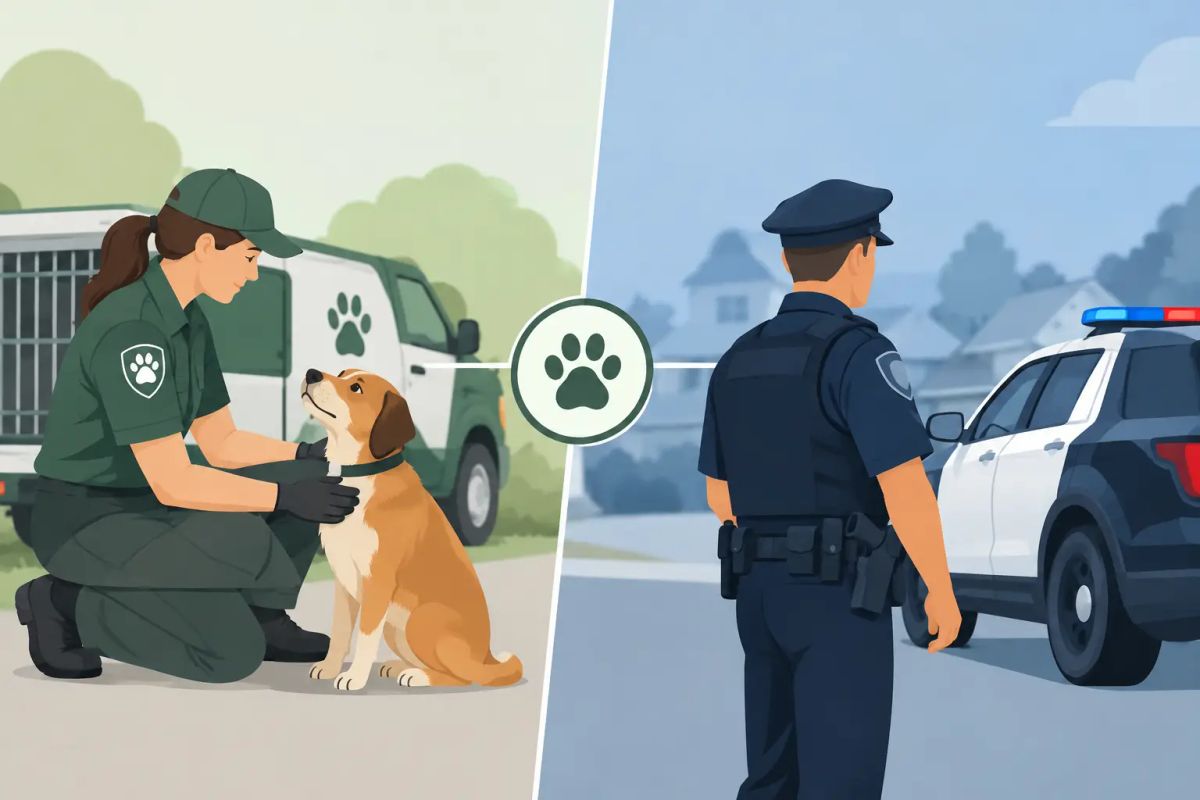
Animal control officers are generally responsible for enforcing local animal ordinances and responding to many animal-related calls. Their work may include stray animal intake, licensing enforcement, bite investigations, dangerous dog complaints, welfare checks, quarantine orders, and impoundment. In some Nevada jurisdictions, animal control officers also investigate suspected cruelty and may issue citations or seek warrants under the authority granted to them.
Police officers and sheriff's deputies enforce criminal law. When the facts suggest intentional cruelty, severe neglect, violence, threats to people, illegal fighting, theft, or another criminal offense, law enforcement has a central role. Officers can secure a scene, conduct a criminal investigation, interview witnesses, gather evidence, make arrests when probable cause exists, and coordinate with prosecutors.
The practical distinction is this: animal control often brings specialized animal-handling knowledge and local ordinance authority. Police bring broader criminal investigative authority and the ability to respond to immediate threats to public safety. A credible cruelty report may require both.
No agency should treat the involvement of the other as a reason to step back. Animal control should not be expected to carry a serious criminal case without law enforcement support. Police should not dismiss a cruelty complaint as "just an animal control issue" when evidence points to a crime. Animals are living victims, and cruelty is frequently connected to broader patterns of violence, neglect, and community instability.
When to Call Animal Control
Animal control is often the right first call for non-emergency animal welfare concerns, particularly when there is no immediate danger to a person or animal. That can include an apparently abandoned pet, chronic sanitation concerns, an animal running loose, a licensing violation, a barking complaint, or a request for a welfare check where the animal appears distressed but the situation is not actively unfolding.
Animal control may also be equipped to assess whether an animal has access to water, shelter, food, veterinary care, and humane conditions as required by local rules. Their officers can document the condition of the animal, educate an owner, issue notices, impose corrective deadlines, or take enforcement action where authorized.
But a welfare check should not become a paper exercise. If an officer repeatedly observes dangerous conditions and the owner fails to comply, escalation matters. Repeated neglect is not harmless simply because it happens behind a fence or inside a home. Patterns must be documented, shared, and treated as evidence of a possible ongoing offense.
Local procedures differ across Nevada. Some communities operate dedicated animal services departments, while others rely on contracts, county systems, or sheriff's offices. Residents should know which agency covers their address before a crisis occurs, but agencies also have a duty to direct callers promptly when jurisdiction is unclear.
When Police Must Be Involved
Call 911 when there is an immediate threat: an animal is being actively beaten or tortured, a violent person is threatening others, an animal attack is in progress, firearms or weapons are present, or a situation is escalating rapidly. The same applies when a person may be in danger, including children, older adults, or victims of domestic violence.
For urgent but non-emergency criminal concerns, call the local police or sheriff's non-emergency line and clearly state that you are reporting suspected animal cruelty. Describe the facts, not assumptions. Say what you saw, when you saw it, where it occurred, and whether the animal appears injured, trapped, dehydrated, emaciated, or in immediate distress.
Police involvement is especially necessary when a report includes signs of deliberate harm, organized animal fighting, serious injury or death, abandonment under dangerous conditions, violations of court orders, or conduct that may meet the threshold for felony prosecution. Animal cruelty laws carry meaning only when investigators preserve evidence and prosecutors receive cases strong enough to act on.
A caller should not have to prove a crime before reporting it. That is the job of trained investigators. But clear, specific information helps agencies recognize urgency and decide how to respond.
What to Document Safely
If it is safe and legal to do so, record details that may help an investigation. Do not enter private property, confront a suspected offender, trespass, or put yourself at risk to obtain evidence. A report is stronger when it provides usable facts rather than a vague claim.
When making a report, include:
- The exact address or closest possible location, plus the date and time.
- A description of the animal, including species, color, size, and visible injuries or condition.
- What you personally witnessed, including how long the condition has existed if known.
- Photos or video taken from a lawful public location, if they can be captured safely.
- Names and contact information for other witnesses willing to speak with investigators.
Ask for a report or case number. If the condition continues, make follow-up reports and reference the earlier case number. Repeated reports establish a timeline. They also reveal whether a problem is isolated, unresolved, or being ignored.
The Gap Between a Call and Accountability
The animal control versus police question matters because response failures often happen in the gap between agencies. A dispatcher may classify a report as a nuisance complaint. An officer may lack training in recognizing cruelty indicators. Animal control may issue a warning without checking whether the owner has a history of violations. Police may assume animal services will handle the case, while animal services assumes police will pursue criminal charges.
That gap serves offenders, not animals or communities.
Strong enforcement requires written protocols for joint response, evidence collection, veterinary assessments, warrant procedures, seizure decisions, and referral to prosecutors. It also requires adequate staffing. An agency cannot investigate every serious complaint thoroughly if one officer is responsible for an entire region, after-hours response is unavailable, or animal care facilities are overwhelmed.
Transparency is equally necessary. The public deserves to know whether cruelty reports are investigated, how cases are resolved, and whether repeat offenders face meaningful consequences. Public records, clear agency reporting, and lawful offender accountability tools help communities identify systemic failures that might otherwise stay hidden.
Nevada Animal Advocates supports the principle that animal abuse cannot be treated as a private matter or a low-priority inconvenience. A statewide animal abuse registry and stronger enforcement standards can help close the information gap between communities, agencies, and the public. Accountability begins with visibility, but it must lead to action.
What Better Response Looks Like
A serious cruelty response does more than remove an animal from a dangerous situation. It investigates the circumstances, identifies every responsible party, documents prior complaints, obtains veterinary evidence, and evaluates whether other victims may be at risk. It treats the case as a matter of law and public safety, not merely an animal services workload.
This does not mean every call should result in an arrest or seizure. Due process matters. Some reports involve misunderstandings, temporary hardship, or conditions that can be corrected quickly with education and support. Enforcement must be evidence-based, fair, and consistent.
But fairness is not passivity. Where conditions are severe, repeated, or intentional, agencies must act decisively. Warnings that never escalate, citations that are never enforced, and cases that disappear between departments communicate that cruelty carries little consequence.
If an Agency Does Not Respond
If you believe a report of animal cruelty was mishandled, keep a written record of every contact. Note dates, names, case numbers, what you reported, and what response was promised. Request updates through appropriate public channels and ask whether the case was referred to law enforcement or a prosecutor.
You can also raise concerns with agency leadership, local elected officials, and public oversight bodies. Journalists and advocacy organizations may have a role when there is a documented pattern of nonresponse or a public-interest failure. The goal is not to interfere with an investigation. The goal is to ensure that public agencies meet their responsibility to investigate credible reports and protect vulnerable animals.
The next time someone asks whether to call animal control or police, the most honest answer may be: call the agency that can respond fastest, and make clear when cruelty or immediate danger is involved. Then insist that the report does not end at the first phone call. Animals cannot file complaints, preserve evidence, or demand follow-up. Communities must do it for them.