
Best Practices for Cruelty Investigations
Published by Nevada Animal Advocates
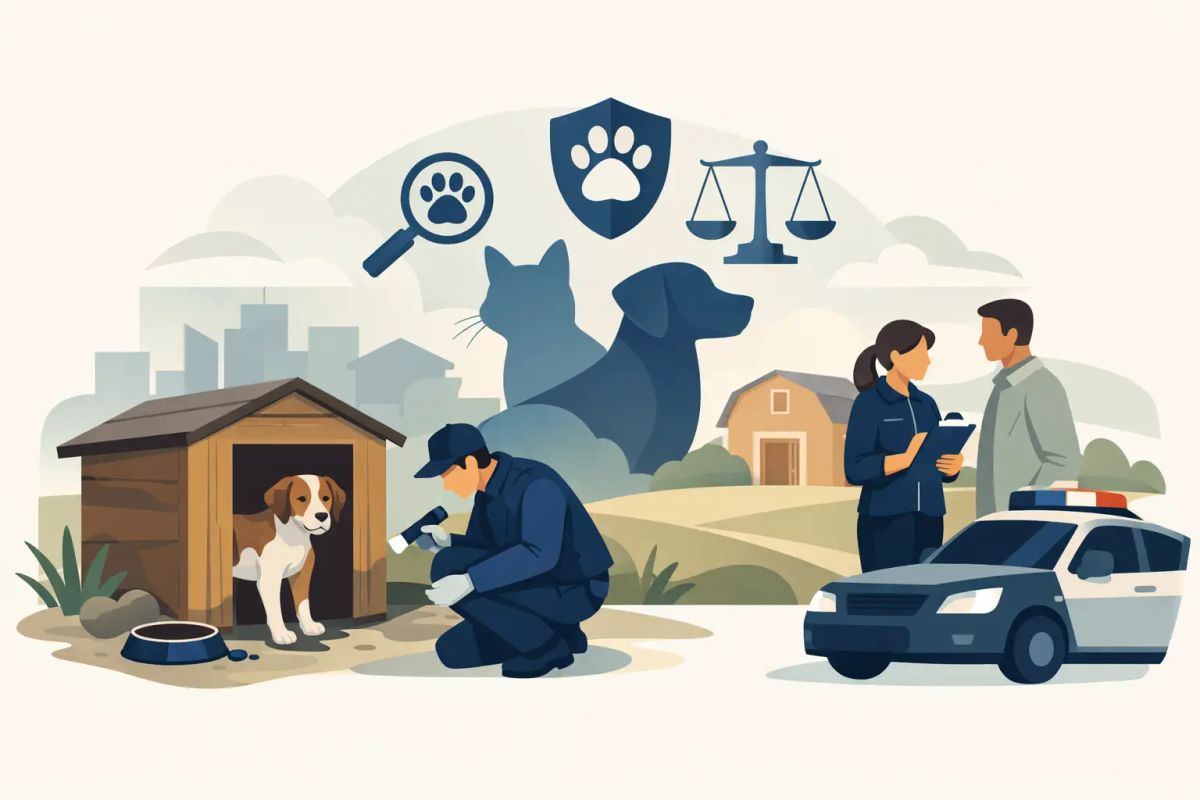
A cruelty case can fail long before a courtroom decision. A delayed welfare check, a vague incident report, a missing photograph, or an animal moved without documentation can leave an abused animal unprotected and an offender unaccountable. The best practices for cruelty investigations are not bureaucratic details. They are the difference between a concern that disappears and a case that produces real consequences.
Animal cruelty must be treated as a public-safety issue, a legal issue, and an urgent welfare issue. Effective investigations protect animals from further harm while preserving the facts needed for prosecutors, courts, and communities to act. That requires trained responders, clear protocols, and agencies willing to take cruelty seriously.
Start With Safety, Urgency, and a Clear Record
The first responsibility is to assess immediate danger. Responders should determine whether an animal needs emergency veterinary care, food, water, shelter, or removal from a dangerous environment. When conditions create an imminent threat, waiting for perfect information can compound suffering.
At the same time, urgency does not excuse poor documentation. The initial report should capture who observed the condition, when and where it occurred, the number and type of animals involved, and what was seen, heard, smelled, or recorded. Facts matter. Statements such as “the animal looked neglected” are far less useful than specific observations: visible ribs, untreated wounds, no accessible water, extreme heat exposure, accumulated waste, or an animal unable to stand.
Dispatchers and agencies should preserve the original complaint, including photographs, videos, call recordings, messages, and any identifying information provided by the reporter. Anonymous reports may still be credible, particularly when supported by visible conditions or independent witnesses. A reporter’s wish for privacy should not become a reason to dismiss an animal’s suffering.
Preserve Evidence From the First Contact
Cruelty investigations often depend on evidence that changes quickly. Food and water bowls can be filled after a complaint. Animals can be relocated. Injuries can worsen, heal, or be hidden. Weather conditions may shift within hours. Investigators should document the scene before conditions are altered whenever safety permits.
Photographs and video should establish context before focusing on details. Capture the property, enclosures, access points, living areas, food and water sources, waste accumulation, and each affected animal. Then document injuries, body condition, mobility, coat condition, and behavior. Wide shots help show the environment; close shots help show the harm. Both are necessary.
A strong evidence record commonly includes four connected categories:
- Scene documentation showing where and how animals were kept.
- Animal-specific documentation, including photographs, identification details, weight, and condition assessments.
- Veterinary findings that explain pain, injury, disease, malnutrition, or the likely duration of neglect.
- Witness and suspect statements recorded accurately, with dates, times, and the identity of the person making the statement.
Chain of custody matters as much in cruelty cases as it does in any other criminal investigation. Agencies should track who collected each item, where it was stored, when it was transferred, and how digital evidence was preserved. Files should retain original dates and metadata when possible. A compelling image can lose value if no one can establish when it was taken or whether it accurately reflects the scene.
Let Veterinary Evidence Explain the Harm
A veterinarian is not merely a treatment provider in a cruelty case. Veterinary professionals can help establish the severity of suffering, distinguish chronic neglect from a sudden medical crisis, estimate how long a condition may have existed, and identify whether injuries are consistent with an explanation offered by an owner.
Prompt examinations are especially critical after seizure or removal. The medical record should connect observable conditions to clinical findings: dehydration, parasites, fractures, infected wounds, starvation, dental disease, heat stress, untreated illness, or signs of repeated trauma. Body-condition scoring, diagnostic testing, treatment plans, and prognosis can all help prosecutors explain why a case was not simply about an untidy yard or a temporary lapse in care.
Not every case presents the same legal path. Some animals are seriously ill despite attentive care, and some owners face genuine financial or medical crises. Investigators should not assume intent based on appearance alone. The question is whether the facts support neglect, abandonment, intentional harm, unlawful conditions, or another violation under applicable law. Fair investigations strengthen legitimate cases and protect public trust.
Interview Carefully and Corroborate Everything
Witness interviews should happen as soon as practical, before memories fade or people compare accounts. Investigators should ask witnesses to describe what they personally observed rather than inviting speculation about motives. Dates, frequency, changes over time, sounds of distress, access to food and water, and prior attempts to seek help may all be relevant.
Suspect interviews also require discipline. Investigators should document explanations without adopting them uncritically. If an owner says an animal has food, water, veterinary care, or a medical condition, that claim should be checked against the scene, veterinary records, receipts, surveillance footage, and witness testimony. Compassion for human hardship does not require authorities to ignore preventable suffering.
Cases involving multiple agencies need clear communication. Animal control, law enforcement, code enforcement, prosecutors, veterinarians, shelters, and emergency responders may each hold part of the record. A designated case lead and regular information sharing reduce gaps that can derail enforcement. The public should not have to watch agencies pass responsibility while animals remain in danger.
Use Legal Authority Decisively and Lawfully
Investigators must understand the limits and tools of their authority. Consent, warrants, exigent circumstances, seizure procedures, notice requirements, and animal custody rules vary by jurisdiction. Cutting corners can jeopardize a case, even when the underlying cruelty is obvious.
That is why written protocols and recurring training are essential. Responders should know when they can enter to address an emergency, when a warrant is needed, how to articulate probable cause, and how to request authority to seize animals or obtain veterinary examinations. Prosecutors should be consulted early in complicated cases, particularly those involving large numbers of animals, commercial operations, repeat offenders, or suspected organized cruelty.
Courts also need a clear picture of ongoing risk. Where the law allows it, agencies should seek conditions that protect animals while a case proceeds, including restrictions on possession, required veterinary care, inspections, or forfeiture. A criminal case that leaves animals in the same dangerous setting is not a complete response.
Build Accountability Beyond the Initial Case
The best practices for cruelty investigations do not end with an arrest, citation, or animal removal. Agencies should track outcomes: charges filed, dismissals, convictions, sentencing, restitution, animal forfeiture, and future possession restrictions. That information reveals whether enforcement is producing protection or whether cases are repeatedly weakened by preventable failures.
Public accountability must be accurate and responsible. People accused of cruelty are entitled to due process, and public-facing records should clearly distinguish allegations from adjudicated findings. But confirmed offenses should not vanish into inaccessible files. Transparency helps communities make informed decisions, supports reporters and advocates, and exposes patterns that demand policy action.
A statewide animal abuse registry can serve that public-interest purpose when it is based on reliable, verified case information and administered with clear standards. It is not a substitute for investigation or prosecution. It is a mechanism for visibility after the justice system has acted - and a reminder that cruelty offenses have consequences beyond a single courtroom date.
Give the Public a Meaningful Role
Community members are often the first to see warning signs. They should report urgent danger to the appropriate emergency authority and provide precise, factual information. If it is safe and lawful to do so, they can document dates, times, locations, and visible conditions without trespassing, confronting a suspected offender, or putting themselves at risk.
The public also has a civic responsibility after a case becomes known. Residents can ask whether local agencies have cruelty-response protocols, whether officers receive animal cruelty training, whether prosecutors pursue meaningful conditions of sentence, and whether repeat offenders are identified. Elected officials should hear that animal protection is not a fringe concern. It is a measure of whether public institutions will act when vulnerable beings are harmed.
Nevada Animal Advocates supports a standard that is both practical and uncompromising: investigate thoroughly, document honestly, enforce the law, and make proven cruelty visible. Animals cannot preserve a scene, call an attorney, or demand that a report be taken seriously. The rest of us can insist that the systems charged with protecting them do their job.