
How to Document Animal Neglect Correctly
Published by Nevada Animal Advocates
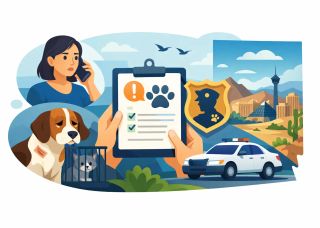
A thin dog behind a fence, no visible water bowl, no shelter in extreme heat - that moment can leave people angry, shaken, and unsure what to do next. Knowing how to document animal neglect matters because outrage alone rarely moves a case forward. Clear, credible evidence does.
Animal neglect is often persistent rather than dramatic. It can look like chronic lack of food or water, untreated wounds, dangerous confinement, severe matting, exposure to heat or cold, or animals left in filth for long periods. What turns concern into action is documentation that shows a pattern, preserves facts, and gives animal control, law enforcement, or prosecutors something they can actually use.
Why documentation matters in animal neglect cases
Neglect cases often fall apart when reports are vague. Saying an animal looked bad may be honest, but it is not enough. Authorities need dates, times, conditions, and observable facts. They need to know whether this was a one-time issue or an ongoing failure to provide basic care.
That is why strong documentation is a public-interest issue, not just a personal record. Good evidence supports enforcement. It creates accountability. It also reduces the chance that a neglect report is dismissed as a neighborhood dispute or a misunderstanding.
At the same time, documentation has limits. It does not make someone an investigator, and it does not give private citizens the right to trespass, seize animals, or confront an owner recklessly. The goal is to preserve what you can lawfully observe and report it in a way that holds up.
How to document animal neglect without compromising a case
Start with what you can directly see, hear, and verify. Stay with facts. If a dog appears underweight, note visible ribs, hip bones, or spine rather than declaring starvation as a medical diagnosis. If there is no water visible, record that no accessible water container could be seen at the time you observed the animal.
This distinction matters. Objective descriptions are far more useful than conclusions. They give responding agencies a cleaner basis for follow-up and reduce openings for the evidence to be challenged.
Record the basics every time
Each observation should include the date, the time, and the exact location. If the address is uncertain, note cross streets, landmarks, apartment number, lot number, or anything else that narrows the location. If there are multiple animals, describe each one separately when possible.
Write down weather conditions if they are relevant. In neglect cases, heat, cold, rain, and lack of shelter can be central facts. A dog left outside at 108 degrees with no shade is not the same case as a dog outside on a mild morning.
Use photos and video carefully
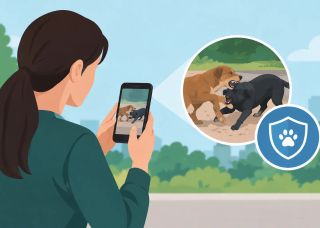
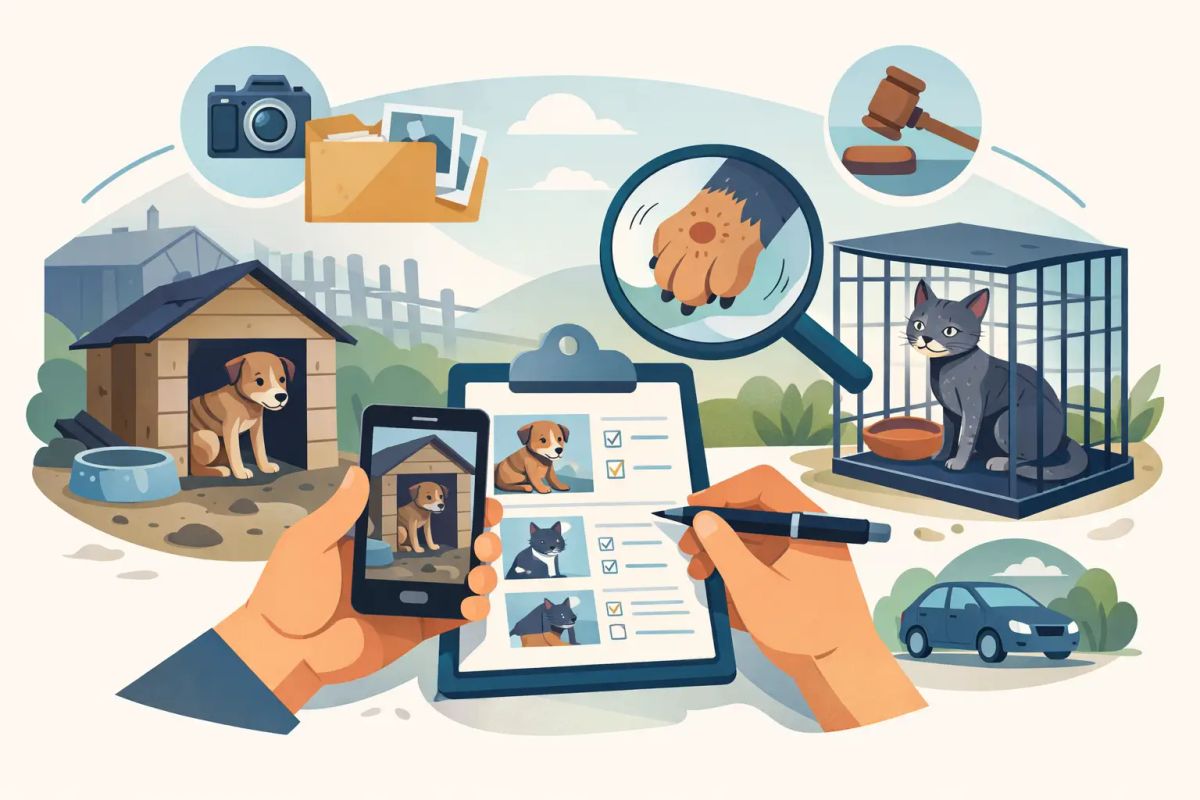
Photos and video can be powerful, especially when they show recurring conditions over several days. Take clear images from public property or from a place where you have a legal right to be. Capture the overall scene first, then closer images of specific concerns such as empty bowls, lack of shade, accumulated feces, unsafe tethering, visible injuries, or exposed bones.
Keep your footage steady and avoid commentary that turns into speculation. A short video showing an animal circling in a cramped pen or panting heavily in direct sun may be more useful than a long, emotional recording filled with accusations.
If possible, let your device retain the original time and date metadata. Do not edit images in ways that could call authenticity into question. Brightness corrections may seem harmless, but if a case becomes contested, original files are stronger than altered versions.
Build a timeline, not just a single incident
Neglect is often about repetition. One empty bowl might be explained away. Five observations over two weeks showing the same dog without water, proper shelter, or adequate body condition tells a different story.
A simple written log is often enough. Note what you observed, how long the condition appeared to last if known, and whether it changed over time. If the animal disappeared for several days and returned in worse condition, that is worth documenting too.
Identify witnesses when appropriate
If neighbors, delivery drivers, maintenance workers, or other people have seen the same conditions, encourage them to make their own reports. Independent witness accounts can reinforce a pattern. Do not coach them or ask them to exaggerate. The strongest statements are specific and firsthand.
If someone is willing, note their full name and contact information so authorities can follow up directly. Anonymous reports can still matter, but named witnesses often carry more weight.
What to avoid when documenting animal neglect
Do not trespass onto private property. Do not peer into areas where there is a reasonable expectation of privacy. Do not open gates, enter yards, or climb fences to get better evidence. Illegal entry can damage a case and put you at risk.
Do not confront the owner if there is any chance of escalation. Some people respond to scrutiny with hostility, threats, or retaliation against the animal. If the situation feels volatile, document from a safe distance and report immediately.
Do not post everything on social media before reporting it. Public pressure has its place, but early online exposure can complicate active investigations, spread incorrect details, and turn evidence into a public argument. Report first. Share cautiously, if at all.
Do not assume every thin or isolated animal is a neglect case. Senior animals, animals under veterinary treatment, and working or outdoor animals may have conditions you cannot assess from a distance. That is exactly why factual documentation matters more than assumptions.
When to report and who to contact
If an animal appears in immediate danger, report it right away. Immediate danger can include severe injury, collapse, heat distress, inability to stand, no access to water in extreme weather, or animals trapped in conditions likely to cause rapid harm or death.
For non-emergency neglect, report to the appropriate local animal control agency, law enforcement agency, or humane enforcement body in your area. In some jurisdictions, animal control takes the lead. In others, law enforcement may be necessary, especially when cruelty laws are implicated.
When you report, be concise and organized. Provide the location, number of animals, what you observed, how long it has been happening if known, and whether you have photos, video, or witnesses. Ask for a report number or incident reference if the agency provides one.
If the case is not addressed and the neglect appears ongoing, follow up. Persistence matters. Weak enforcement is one reason abuse continues unchecked. A documented pattern, paired with repeated reports, creates pressure for review and action.
A practical standard for stronger evidence
If you are wondering whether your documentation is strong enough, ask a simple question: could a stranger understand what happened just from your notes and files? If the answer is no, add more factual detail.
Strong documentation usually shows five things clearly: where the animal was, when the condition was observed, what the condition looked like, whether it was repeated, and who can verify it. That standard is not legal advice, but it is a practical benchmark that makes reports harder to ignore.
For advocates in Nevada and beyond, this is bigger than one case. Public accountability depends on records that are clear, lawful, and difficult to dismiss. That is true whether the issue is a single neglected dog in a backyard or a larger pattern of failed enforcement. Organizations such as Nevada Animal Advocates exist because cruelty does not end with awareness alone. It ends when evidence, enforcement, and public pressure align.
How to document animal neglect with safety in mind
Your safety is part of the process. If you suspect the owner is violent, armed, or unstable, do not linger. Capture what you can lawfully observe, leave, and contact authorities. No photo is worth a confrontation that puts you or the animal in greater danger.
It also helps to store copies of your notes and original files in more than one place. Phones get lost. Messages get deleted. If the case stretches on, you do not want the record to disappear with a damaged device.
Documentation is not about proving you care more. It is about creating a record that gives animals a real chance at protection. When the facts are clear, the excuses get weaker - and that is where accountability begins.