
Best Evidence for Animal Cruelty That Holds Up
Published by Nevada Animal Advocates

A cruelty case can turn on one detail: whether the evidence shows more than a disturbing moment. The best evidence for animal cruelty gives authorities a clear, lawful, and verifiable record of what happened, where it happened, when it happened, and who was responsible. Outrage can start a report. Documentation is what gives that report the power to move.
For Nevada residents and advocates, the goal is not to investigate like law enforcement or confront a suspected offender. It is to preserve facts, protect animals from further harm, and give the appropriate agency material it can actually use. That distinction matters. A rushed accusation or altered video can complicate a case. Careful records can strengthen it.
Best Evidence for Animal Cruelty Is Specific and Verifiable
Animal cruelty laws cover a range of conduct, from deliberate violence to criminal neglect. What is persuasive in one situation may not prove another. A single photograph of a thin dog, for example, may raise serious concern but may not establish how long the animal has been deprived of care, who owns the dog, or whether a medical condition is involved. Evidence becomes stronger when several facts support each other.
The most useful documentation generally establishes four points: the condition of the animal, the surrounding circumstances, the identity or control of the responsible person, and a reliable timeline. A clear record can show whether an animal lacked water during extreme heat, had untreated injuries, was confined in unsafe conditions, or was repeatedly left without necessary care.
Evidence does not need to be dramatic to matter. Repeated observations of an animal without shelter, a pattern of missed care, or a consistent record of worsening injuries may be more meaningful than one graphic image. Cruelty often depends on patterns, and patterns require dates, details, and consistency.
Photos and Video That Preserve Context
Photographs and videos are often the first evidence available to a witness. Their value depends on how they are captured and preserved. Whenever it can be done safely and lawfully from a public place or another location where you have a right to be, record the full setting before focusing on a close-up. Show the animal, its enclosure or location, available food and water, shelter, visible hazards, and conditions such as excessive heat, filth, or dangerous confinement.
Use your device's original camera function and keep the original files. Do not apply filters, add music, crop out context, or edit clips together. A short video that slowly documents the surrounding area can be more credible than a heavily edited post. If an animal is visibly injured, capture the injury without moving or handling the animal unless doing so is necessary to prevent immediate harm.
Screenshots of social media posts can help, particularly when they include admissions, threats, dates, or identifying details. But screenshots are easier to challenge than original material. Save the full post or video when possible, record the account name and date, and make a written note explaining what you saw and when you saw it.
Veterinary, Agency, and Other Contemporaneous Records
Professional records can be especially powerful because they are created close in time to the event and by people with relevant expertise. Veterinary records may document untreated injuries, malnutrition, parasites, pain, or the likely duration of a condition. Animal control reports, police incident reports, inspection records, and prior welfare-check records can establish a history of complaints or official observations.
If you are the animal's lawful owner or caretaker and obtain veterinary care, ask the veterinarian to document the animal's condition thoroughly. Do not pressure a professional to make legal conclusions. Their role is to record medical findings; investigators and courts determine whether those findings meet the legal definition of cruelty.
Written notes from a witness can also matter. Record the date, approximate time, exact location, weather conditions when relevant, what you directly observed, and the names of any other witnesses. Keep facts separate from assumptions. “The dog had no visible water bowl at 3:00 p.m. while temperatures were above 100 degrees” is stronger than “the owner never gives the dog water” unless you can truthfully document that broader claim.
Witness Accounts and Admissions
Independent witnesses can confirm that a condition was ongoing or that a particular incident occurred. If other people saw the same conduct, encourage them to make their own reports and provide their own accounts. Coordinated language is less useful than separate, honest statements based on personal observation.
Admissions can be significant as well. A public post, text message, voicemail, or recorded statement may reveal ownership, intent, knowledge of an animal's condition, or refusal to seek care. Preserve the complete communication rather than sharing only the most inflammatory line. Context protects credibility.
Do not attempt to obtain admissions through harassment, threats, impersonation, or trespass. An advocate's responsibility is not to manufacture evidence. It is to make sure real evidence is not lost.
Preserve Evidence Without Compromising the Case
Good evidence can lose value when it is mishandled. Keep original photos, videos, messages, and notes in a secure location. Back up digital files without overwriting the originals. Create a simple log that identifies each file, the date it was created, where it was taken, and what it depicts. If you later send copies to an agency, note the date and recipient.
Avoid posting graphic material, names, addresses, or accusations online before authorities have had an opportunity to respond. Public exposure can alert a suspected offender, invite retaliation, endanger witnesses, and make it harder to protect an animal. It can also spread misinformation when the facts are incomplete. Public accountability is essential, but it must be grounded in verified information and due process.
Never enter private property, climb fences, open gates, remove an animal, or place yourself in danger to collect evidence. Trespass can create legal problems and may put both you and the animal at greater risk. If an animal faces immediate danger, contact 911 or the appropriate local law enforcement or animal control agency rather than trying to resolve the situation alone.
What Evidence Is Needed Depends on the Alleged Cruelty
Neglect cases often require documentation over time. Investigators may need to see repeated lack of food, potable water, shelter, sanitation, medical care, or protection from dangerous weather. Dates matter because an empty bowl observed once is different from evidence of persistent deprivation.
Physical abuse cases may depend more heavily on injury documentation, eyewitness accounts, surveillance footage, veterinary findings, and prompt reporting. The faster an injury is examined and recorded, the easier it may be to connect the condition to a suspected act.
Abandonment cases may require proof of ownership or control, the animal's location and condition, and facts showing the person intentionally left the animal without lawful care. Cases involving breeding, hoarding, or multiple animals can require detailed records of animal counts, housing conditions, medical needs, and repeated violations.
The law does not demand that a community member prove every element before making a report. It does require reporters to be truthful. Report what you know, identify what you do not know, and let trained authorities investigate.
Turn a Concern Into a Usable Report
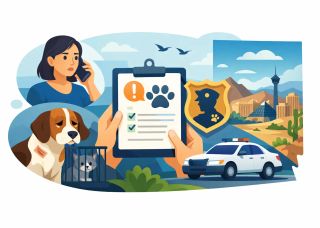
When making a cruelty report, provide the exact address or best available location, a description of the animal or animals, the date and time of your observations, and any immediate safety concerns. Explain whether the animal appears injured, trapped, without water, exposed to dangerous temperatures, or otherwise at risk. Submit unedited supporting files if the agency accepts them, and retain copies for yourself.
Ask for a case or incident number when one is available. If conditions continue, document new observations and reference the original report rather than assuming one call resolves the problem. Continued reporting should add new facts, not repeat speculation.
Nevada Animal Advocates supports the principle that abuse cannot remain hidden behind silence, weak enforcement, or fragmented records. A public-facing accountability system has value only when reports are accurate, agencies are equipped to act, and communities insist that cruelty offenses carry real consequences.
The strongest action is often the most disciplined one: document what is there, preserve it exactly as you found it, report it promptly, and keep the focus on the animal's safety. That is how a concerned witness helps turn a preventable act of suffering into a case authorities can pursue.