
Why Cross Reporting Animal Abuse Matters
Published by Nevada Animal Advocates
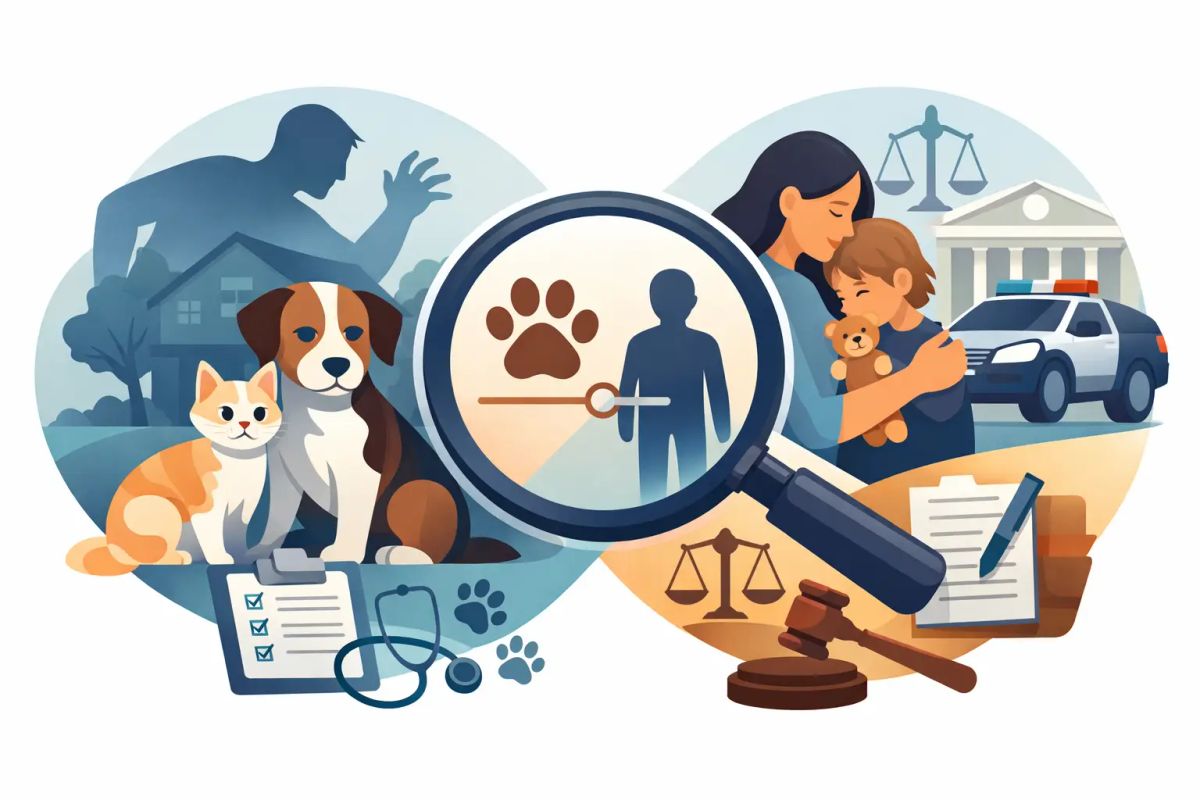
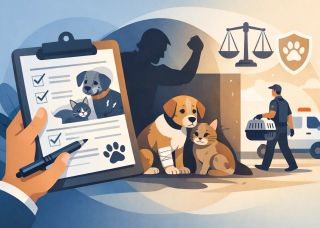
A child welfare worker sees signs of neglect in a home and also notices an emaciated dog chained outside. An animal control officer responds to a cruelty complaint and finds children living in the same unsafe conditions. When those observations stay in separate files, everyone is left at greater risk. Cross reporting animal abuse exists to stop that failure.
What cross reporting animal abuse means
Cross reporting animal abuse is the practice of sharing suspected abuse or neglect information between agencies that traditionally work in separate lanes. That can include animal control, law enforcement, child protective services, adult protective services, domestic violence responders, social workers, code enforcement, and prosecutors.
The principle is straightforward. Abuse rarely lives in one category. A person who harms an animal may also intimidate a partner, neglect a child, or endanger an older adult or disabled family member. Likewise, homes marked by chronic violence, hoarding, substance abuse, or severe neglect often put animals at risk too. Cross reporting creates a path for one red flag to trigger broader protection.
This is not about expanding bureaucracy for its own sake. It is about refusing to treat cruelty as an isolated incident when evidence shows it often signals something larger.
Why cross reporting animal abuse is a public safety issue
Animal cruelty is often dismissed as secondary, especially when agencies are stretched thin. That is a mistake. Cruelty can be an early warning sign of escalating violence, coercive control, and dangerous household instability.
Professionals across fields have seen the pattern for years. Victims of domestic violence may delay leaving because an abuser threatens the family pet. Children living with violence may witness or be forced to participate in cruelty. Vulnerable adults may be unable to care for animals because of neglect, exploitation, or unsafe living conditions. In some cases, the same person causing harm is responsible for all of it.
Cross reporting matters because fragmented systems miss patterns. One agency may see a single complaint. Another may see a prior call, an open case, or a history of dangerous conduct. When those pieces are connected, the response becomes more accurate and more urgent.
That matters for prevention as much as prosecution. Waiting until abuse escalates into severe injury or death is not a serious public safety strategy.
The case for mandatory cross reporting
Voluntary cooperation between agencies is better than silence, but it is not enough. Informal systems depend too much on individual judgment, office culture, and whether the right person happens to make the right call. When cross reporting is mandatory, the expectation becomes clear and the standard becomes enforceable.
That kind of reform helps in several ways. It creates consistency across counties and departments. It reduces the chance that obvious warning signs will be ignored. It gives frontline workers clearer guidance about when to report, what to document, and who should receive the information.
Mandatory reporting also sends a message about how the law views animal cruelty. If the state treats abuse as connected to family violence and community harm, agencies are more likely to do the same. Policy shapes culture.
Still, good policy has to be written carefully. Overly vague rules can create confusion, while overly broad rules can lead to defensive overreporting without meaningful follow-up. The standard should be clear enough to act on and strong enough to matter.
Where cross reporting succeeds and where it breaks down
Cross reporting works best when it is built into procedure, training, and accountability. A police officer should not have to guess whether an animal cruelty finding belongs in a child endangerment report. An animal control officer should not need personal relationships in another department to raise concerns about a vulnerable adult.
The breakdown usually happens in predictable places. Agencies may use separate databases that do not communicate. Staff may not be trained to recognize crossover signs. Some departments still treat animal abuse as a property issue rather than a violence indicator. Others worry about confidentiality, liability, or workload and default to inaction.
Those concerns are real, but they are not a reason to avoid reform. They are a reason to build it properly. Confidentiality rules can be addressed with clear statutory language and interagency protocols. Training gaps can be fixed. Reporting thresholds can be defined. None of that happens, however, unless lawmakers and agency leaders decide the issue deserves attention.
What better policy actually looks like
Strong cross reporting policy is not just a sentence in a statute. It needs a functioning structure behind it.
First, the law should identify which professionals and agencies are required to report and under what circumstances. Suspicion standards matter. If the threshold is impossibly high, people will wait too long. If it is too low without guidance, the system can become noisy and ineffective.
Second, agencies need standardized reporting channels. A duty to report is weak if staff do not know where to send concerns or how quickly action is required. Timeframes, points of contact, and documentation rules should be explicit.
Third, training has to be ongoing, not one-time. Frontline professionals should know what animal neglect looks like, how coercive control can involve pets, and why hoarding, extreme filth, or repeated welfare calls may signal broader danger. The reverse is also true. Animal welfare personnel should understand the indicators of child abuse, elder abuse, domestic violence, and severe environmental neglect.
Fourth, there must be accountability. If reporting is mandatory on paper but ignored in practice, the policy is performative. Supervisory review, case audits, and data tracking help determine whether the law is being used as intended.
Why this matters in Nevada
In Nevada, as in many states, public accountability around animal abuse remains uneven. Enforcement can vary by jurisdiction, public records are not always easy to navigate, and cruelty cases are too often treated as isolated events rather than indicators of broader risk. That is exactly why reform tools matter.
A statewide focus on offender visibility and systemic accountability can strengthen cross reporting efforts. When communities, journalists, prosecutors, and policymakers can track cruelty offenses more clearly, it becomes harder for patterns to stay buried. Transparency does not replace enforcement, but it raises the pressure to act.
This is where advocacy matters most. Cross reporting is not just an internal agency procedure. It is a legislative and public accountability issue. If the system is failing to connect known abuse indicators, the answer is not patience. It is reform.
The trade-offs critics raise
Some critics argue that cross reporting can pull agencies beyond their expertise. Others worry it could overwhelm already strained departments or lead to unnecessary investigations based on limited observations.
Those concerns should not be brushed aside. Badly designed systems can create paperwork without protection. They can also produce inconsistent referrals if staff are not trained well. But the answer is not to preserve silos that leave victims unprotected. The answer is to define roles carefully.
Cross reporting does not mean every professional becomes an expert in every form of abuse. It means they recognize red flags and pass them to the appropriate authority. It means one agency does not ignore what it plainly sees just because it falls outside a narrow job description.
The real risk is not over-coordination. It is institutional indifference.
What the public should demand
Residents do not need to work inside government to push this issue forward. They can demand laws that require interagency reporting in serious abuse and neglect cases. They can ask elected officials whether agencies are trained to identify crossover violence. They can press for public records systems and offender accountability tools that make cruelty patterns easier to track.
They can also stop treating animal abuse as a private matter or a lesser offense. Cruelty is not a side issue. It is often part of a larger pattern of violence, control, neglect, or danger inside a household.
For advocates, journalists, and policymakers, the test is simple. Are our systems designed to connect obvious warning signs, or are they designed to keep each form of abuse in its own administrative box? If it is the second, then the system is protecting silence more than safety.
Cross reporting will not solve every failure in animal protection or family safety. But it is one of the clearest ways to close a gap that should never have existed in the first place. When one form of abuse is visible, the law should not look away from the rest.