What Happens After Animal Seizure in Nevada?
Published by Nevada Animal Advocates
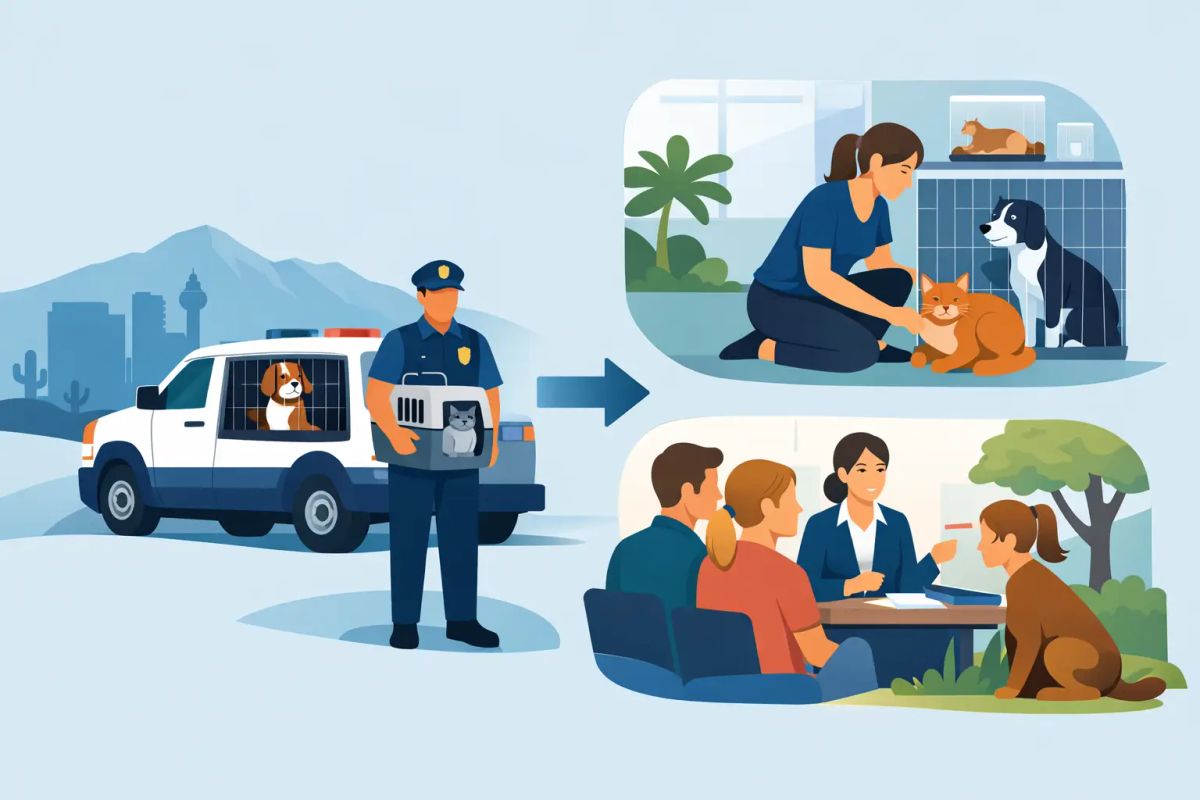
When authorities remove an animal from a home, vehicle, property, or alleged cruelty scene, people immediately ask: what happens after animal seizure? The answer matters because removal alone does not guarantee safety, justice, or a permanent outcome. An animal seizure begins a legal and welfare process that can involve emergency veterinary treatment, evidence collection, temporary custody, court hearings, and, in some cases, permanent forfeiture.
For the animal, time is not an abstract legal issue. Every day in a shelter, foster placement, veterinary facility, or impound setting affects physical recovery and emotional wellbeing. For the public, the process raises a separate question: whether the system will treat cruelty as the serious public-safety concern it is, or allow avoidable delays and weak consequences to put animals at risk again.
What happens after animal seizure by authorities?
An animal may be seized when law enforcement or animal control has legal authority to intervene. That authority can arise through a warrant, an emergency response to immediate danger, a surrender by an owner, or another process permitted by state and local law. The reason for removal shapes what comes next.
In a suspected cruelty case, officers generally document conditions before and during removal. Photographs, videos, veterinary observations, witness statements, food and water conditions, housing, injuries, and the number of animals involved may all become evidence. This documentation is not paperwork for paperwork's sake. It can determine whether a prosecutor can prove neglect, abuse, abandonment, animal fighting, or another offense in court.
The animal is then transported to a safe location. Depending on capacity and the animal's condition, that may be an animal shelter, veterinary hospital, contracted boarding facility, rescue partner, or foster placement approved by the agency. In large-scale cases, housing can become a serious logistical challenge. Agencies must find space while preserving evidence, preventing disease spread, and providing appropriate care.
Immediate care comes before a final legal decision
The first priority should be a welfare assessment. Animals removed from neglect or abuse situations may be dehydrated, underweight, injured, ill, frightened, pregnant, poorly socialized, or carrying contagious disease. A veterinarian may assess body condition, wounds, parasites, dental disease, mobility, organ function, and signs of chronic deprivation.
Veterinary records can serve two purposes at once. They guide treatment, and they may document the extent of suffering for a criminal or civil case. That dual role requires care. Agencies need competent professionals, clear records, and procedures that protect both the animal and the integrity of the evidence.
Not every seized animal will need intensive medical treatment. Some are physically stable but need behavioral evaluation, nutrition, decompression, or a secure placement away from the person accused of harming them. Others need urgent intervention that cannot wait for a hearing. Necessary medical care should not be delayed simply because a case is pending.
Temporary custody does not always mean permanent removal
After seizure, the government or a designated agency may have temporary custody, but ownership rights do not automatically disappear. That distinction can be frustrating in clear cases of suffering, yet it reflects due-process requirements. A permanent decision usually requires a court order, a voluntary surrender, or another legal resolution.
The owner may have an opportunity to challenge the seizure, seek return of the animal, contest allegations, or participate in a custody hearing. The precise process varies by jurisdiction and by the facts of the case. In Nevada, as elsewhere, county practices, local ordinances, charging decisions, and court schedules can affect how quickly a case moves.
This is where delays can be especially harmful. Animals may remain in temporary care for months while cases proceed. Shelters and agencies absorb the costs of food, treatment, housing, and staff time. More importantly, the animal lives in limbo. A system that cannot resolve custody efficiently can create a second layer of harm after the original abuse.
Care-cost hearings and financial responsibility
Some jurisdictions use hearings or legal mechanisms that require an owner to pay for the seized animal's ongoing care while a case is pending. The purpose is straightforward: taxpayers, shelters, and nonprofit partners should not bear unlimited costs while an accused owner retains the ability to delay a final outcome.
These measures must be administered fairly, but they are also a practical accountability tool. Without them, a person facing credible cruelty allegations may prolong litigation while the public pays to keep the animal alive and safe. In large seizures involving dozens of animals, the cost can quickly overwhelm local resources.
The court process determines accountability
A seizure can lead to different legal tracks. There may be a criminal animal cruelty case, a civil forfeiture proceeding, an administrative hearing, or a combination of these. The evidence gathered at the scene and during veterinary evaluation is central to each path.
A criminal case focuses on whether the accused violated the law and, if so, what penalties apply. Depending on the conduct and applicable statutes, consequences can include fines, probation, jail or prison exposure, restitution, counseling or treatment requirements, and restrictions on owning or living with animals. The available penalties and the likelihood they are imposed are not the same thing. Strong laws require strong enforcement, informed prosecutors, and judges willing to recognize the seriousness of animal cruelty.
A forfeiture decision addresses the animal's future. If a court orders forfeiture, legal ownership can transfer away from the prior owner, allowing the animal to be placed for adoption, foster care, transfer to a qualified rescue, sanctuary placement, or other appropriate long-term care. If return is ordered, agencies may be required to release the animal, sometimes with conditions.
Conditions can matter. A court may prohibit contact with particular animals, require inspections, limit the number of animals a person may possess, or impose other safeguards where authorized by law. Conditions without monitoring, however, are only words on paper. Meaningful enforcement requires clear responsibility, reporting channels, and consequences for violations.
What can happen to the animal after the case?
A successful forfeiture or voluntary surrender often gives an animal the best chance to move forward. Once legally available, the agency or placement partner can make decisions based on the animal's needs rather than the pace of litigation.
For some animals, that means adoption after medical recovery and behavioral assessment. For others, particularly animals with specialized needs, a foster home, experienced rescue organization, working-animal placement, or sanctuary may be more suitable. An animal's condition, temperament, history, and safety needs should guide placement decisions, not pressure to clear space quickly.
The outcome is not always simple. Severe trauma, untreated illness, aggression linked to suffering or fear, or extensive rehabilitation needs may narrow options. Humane decisions must be grounded in qualified veterinary and behavioral assessment. But difficult cases are also an argument for earlier intervention. Animals should not be left to deteriorate until every option has become more limited and more costly.
Why public accountability matters after an animal seizure
A seizure is not the finish line. Communities need to know whether the case resulted in charges, a conviction, forfeiture, ownership restrictions, dismissed allegations, or no further action. Without transparency, it is difficult to identify repeat offenders, assess enforcement gaps, or hold institutions accountable when serious cases are mishandled.
Public-facing accountability tools can help residents make informed decisions, especially where convicted offenders may seek to acquire animals again or operate in positions of trust involving animals. They also make a broader point: animal cruelty is not a private inconvenience. It is conduct with real victims and community consequences.
Nevada Animal Advocates supports approaches that treat cruelty enforcement as a public obligation, not an afterthought. Reliable reporting, meaningful penalties, enforceable ownership restrictions, and public accountability each close a gap that abusers can otherwise exploit.
What community members can do
If you see an animal removed from a suspected cruelty situation, avoid assuming that silence means nothing is happening. Active investigations often limit what agencies can publicly share. At the same time, residents have every right to expect professional follow-through.
Document concerns lawfully, report suspected neglect or abuse promptly, preserve any photos or messages already in your possession, and provide factual information to investigators. Do not confront a suspected offender or attempt to remove an animal yourself unless there is an immediate emergency and you are acting under direction from law enforcement. Confrontations can endanger people, animals, and the case.
After a case is resolved, pay attention to the outcome. Ask whether forfeiture was sought where appropriate, whether care costs were addressed, whether ownership restrictions were ordered, and whether violations will be monitored. Civic pressure is most effective when it is informed, specific, and sustained.
An animal seizure is a test of whether a community is prepared to protect vulnerable animals after the cameras leave. The strongest response is one that pairs immediate care with evidence-based enforcement, timely court action, and consequences that prevent the next act of cruelty.