
Why Public Access Animal Cruelty Convictions Matter
Published by Nevada Animal Advocates
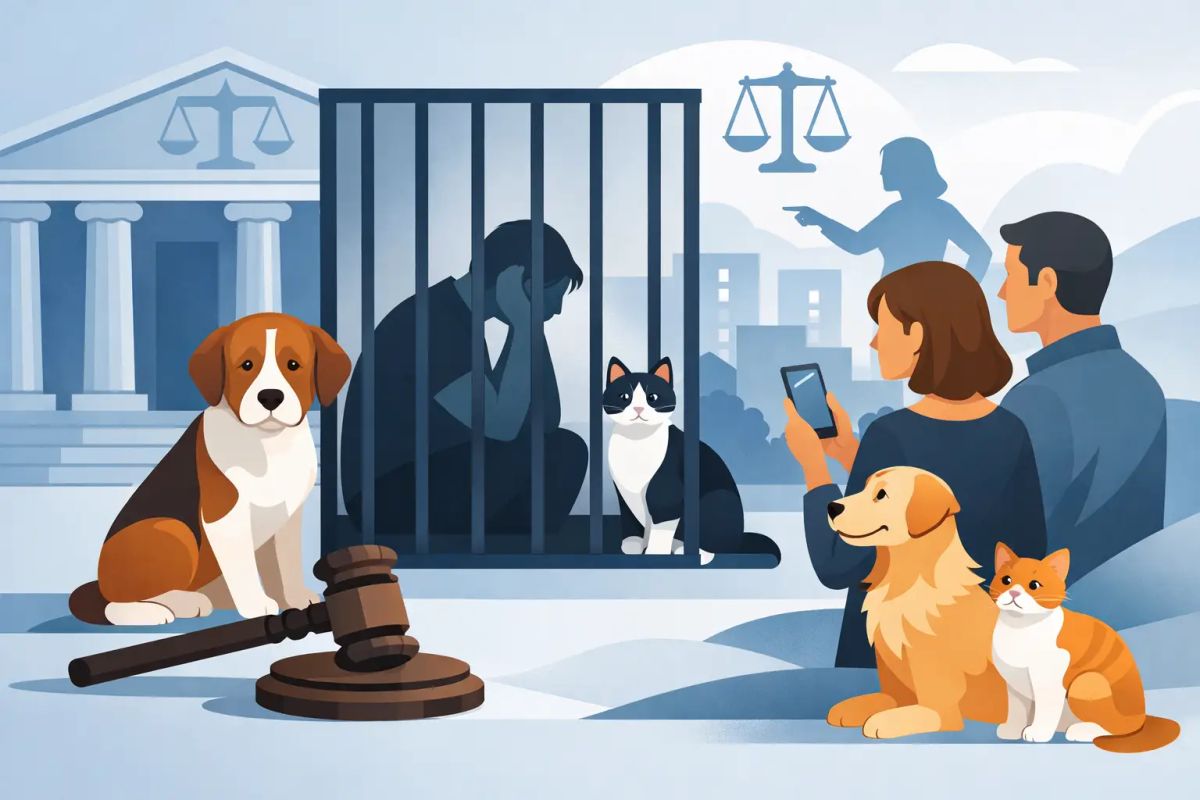
When a person is convicted of abusing an animal, that outcome should not disappear into a courthouse file that few people can find and even fewer people understand. Public access animal cruelty convictions matter because cruelty is not a private mistake. It is a public safety issue, a community trust issue, and a test of whether the legal system is willing to treat violence against animals with the seriousness it deserves.
Too often, accountability stops at the sentence. A case is charged, resolved, and then effectively buried in scattered records, paywalled databases, or local systems that are difficult for the public to search. That weakens deterrence, limits oversight, and leaves neighbors, rescue organizations, employers, landlords, and policymakers without a clear picture of who has been found guilty of animal abuse. Transparency closes that gap.
What public access animal cruelty convictions actually mean
At its most basic level, public access means confirmed conviction information is available in a way ordinary people can reasonably locate and understand. That does not mean publishing rumors, accusations, or social media claims. It means making final court outcomes visible after due process has run its course.
That distinction matters. Advocacy for transparency should never blur the line between allegations and convictions. People are entitled to due process. Communities are also entitled to know when a court has already determined that abuse occurred. A public-facing system rooted in conviction data respects both principles.
In practice, public access can take different forms. It may involve searchable registries, standardized court reporting, public databases, or coordinated records that make conviction information easier to find. The exact structure can vary by state, but the purpose stays the same: confirmed abuse should not be hidden by administrative fragmentation.
Why public access animal cruelty convictions serve the public interest
Animal cruelty is often treated as a niche issue, as if it concerns only animal advocates. That framing is wrong. Abuse cases can signal broader patterns of violence, coercion, and neglect. A person who harms animals may pose risks that extend beyond animals alone, particularly in households marked by intimidation or repeated misconduct.
Public access helps communities make informed decisions. Rescue groups and shelters need better tools to screen adopters and volunteers. Neighbors deserve transparency when patterns of serious abuse have already been proven in court. Journalists and watchdogs need reliable records to track whether prosecutors, judges, and local governments are responding consistently.
It also creates pressure where pressure is needed. Systems improve when the public can see where they are failing. If convictions are rare, plea deals are weak, or repeat offenders continue to access animals without scrutiny, transparency makes those failures visible. That visibility is not punitive for its own sake. It is how reform starts.
The problem with records that are technically public but functionally hidden
Officials sometimes argue that conviction records are already public. On paper, that may be true. In reality, many public records are so scattered, inconsistent, or difficult to obtain that they are effectively inaccessible.
A record hidden behind county-by-county searches, courthouse visits, filing fees, or incomplete case descriptions is not meaningfully public for most residents. If a concerned community member cannot identify an animal cruelty conviction without legal training, spare time, and persistence, the system is not delivering real transparency.
This is where accountability infrastructure matters. A registry or centralized access point does more than collect information. It translates public records into usable public knowledge. That is a major difference. Transparency is not accomplished just because a document exists somewhere. It is accomplished when people can reasonably find and understand the truth.
Public access is not the same as public shaming
Opponents of transparency often frame public access as a form of permanent humiliation. That argument deserves a serious response, because any accountability system should be designed carefully. But the answer is not secrecy.
There is a real difference between responsible disclosure of convictions and reckless online harassment. A properly structured public system relies on verified case outcomes, clear standards, and limited categories of relevant information. It is not a rumor mill. It is a public record tool.
There are trade-offs. States and organizations must decide what information is necessary, how long records should remain prominent, and how to handle appeals, expungements, or data corrections. Those are legitimate design questions. They are not reasons to hide convictions altogether.
When the underlying offense involves deliberate cruelty, torture, neglect leading to death, organized abuse, or repeated harm, the public interest in access is substantial. Pretending otherwise protects offenders from scrutiny more than it protects communities from unfairness.
Why stronger access can improve enforcement
Transparency changes institutional behavior. When conviction patterns are easier to track, lawmakers can see whether current statutes are working. Prosecutors can be assessed on whether serious cases are being pursued appropriately. Courts can be evaluated for consistency. Animal control agencies and law enforcement departments can identify repeat offenders faster.
This matters in states where animal cruelty laws exist but are unevenly enforced. Passing a stronger statute is only one step. If no one can track what happens after arrest, then weak charging decisions, dropped cases, and lenient outcomes remain largely invisible.
Public access animal cruelty convictions can also support better cross-reporting and prevention. Professionals who work in animal welfare, housing, public safety, and family services are better positioned when they are not operating in silos. The more clearly confirmed cruelty offenses are documented, the harder it becomes for repeat abuse to slip through institutional cracks.
What a credible public access system should include
A serious accountability system should be accurate, current, and limited to verified outcomes. That means final convictions, clear offense descriptions, jurisdiction information, and a process for correcting errors. It should not rely on gossip, unverified tips, or raw accusations.
It should also be understandable to the public. Legal records are often written for court systems, not for residents trying to protect animals or evaluate risk. Plain-language summaries, consistent offense labels, and searchable formats make a major difference.
The strongest systems also avoid false promises. Public access is not a substitute for prosecution, sentencing, monitoring, or legislative reform. It is one tool. An important one, but still one part of a larger accountability framework.
For that reason, transparency works best when paired with stronger penalties, meaningful restrictions on animal ownership in severe cases, and better reporting standards statewide. Nevada Animal Advocates has pushed this issue into sharper focus by treating visibility not as a side project, but as a practical form of public protection.
The policy case for making convictions easier to find
If lawmakers want to reduce animal abuse, they should stop treating conviction records as an afterthought. Public access supports deterrence, strengthens oversight, and gives communities a factual basis for action. It also helps expose whether existing laws are too weak or too inconsistently applied.
There is no single policy model that fits every jurisdiction. Some states may favor registries. Others may build centralized court access or agency databases. What matters is the principle: once a person has been convicted of animal cruelty, the public should not have to fight the system to find that information.
That is especially true when advocates are trying to identify repeat offenders, track enforcement gaps, or show lawmakers that abuse cases are not isolated incidents. Without accessible records, public debate is easier to dismiss. With them, reform arguments become harder to ignore.
Animal abuse thrives in silence, minimization, and bureaucratic obscurity. Public access interrupts all three. It says that cruelty counts, convictions matter, and communities have a right to know when the justice system has confirmed that harm was done.
If we want stronger laws, stronger enforcement, and fewer animals left at the mercy of repeat abusers, we need more than outrage. We need records people can see, use, and act on.